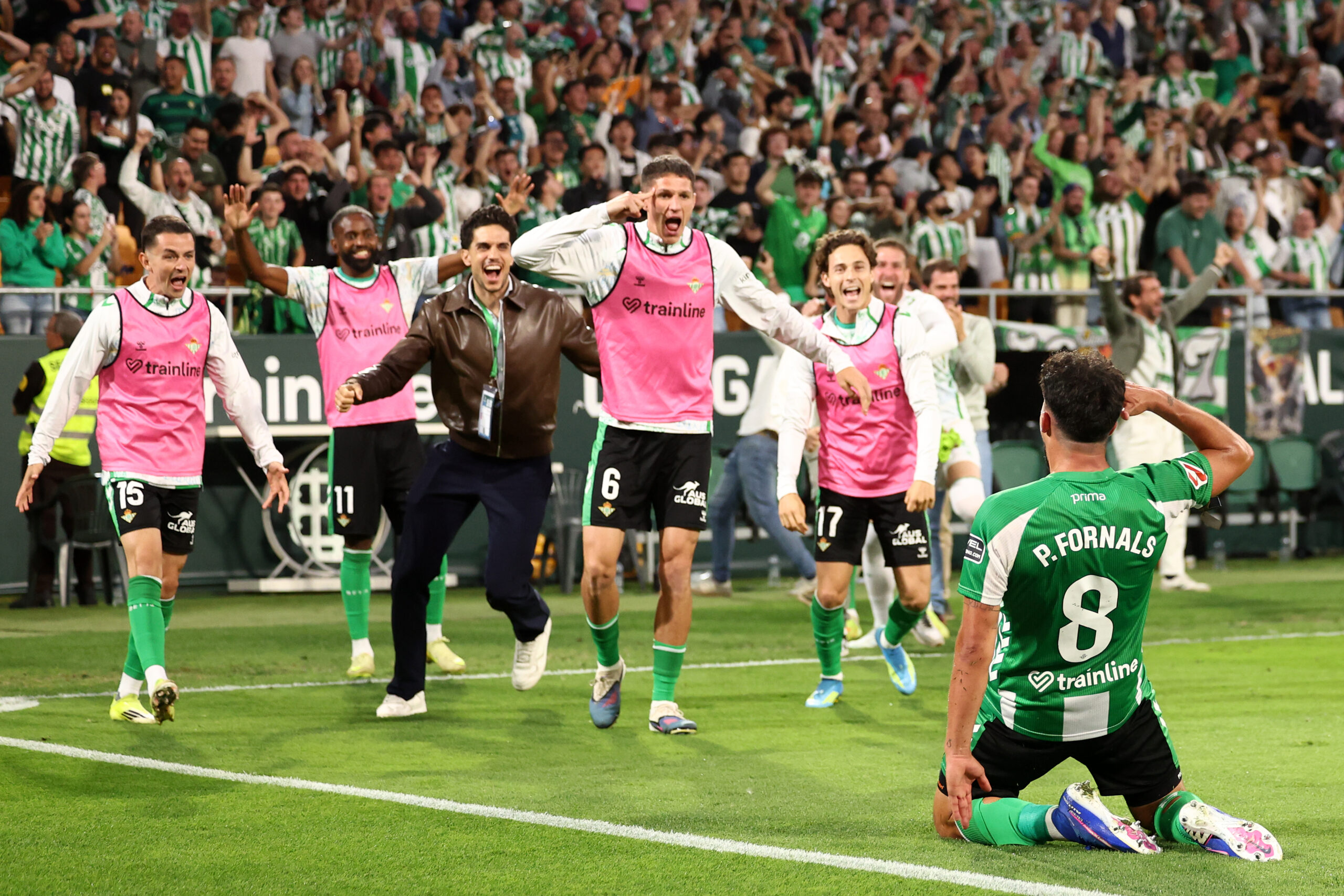

Real Betis have been one of La Liga’s most consistent teams in recent years. Under Manuel Pellegrini, they have finished in the top seven in each of the last six seasons. This season, they locked in a place in the Champions League, while their Europa League campaign ended at the quarter-final stage.
There are, of course, many different reasons behind this level of success. But in this piece I will focus on just one of them: counter-attacks.
Real Betis is the team with the highest number of counter-attacks per match across Europe’s seven major leagues. In this article, I have tried to explain their counter-attacking structure through 12 different models.
1. Parallel Support Runs
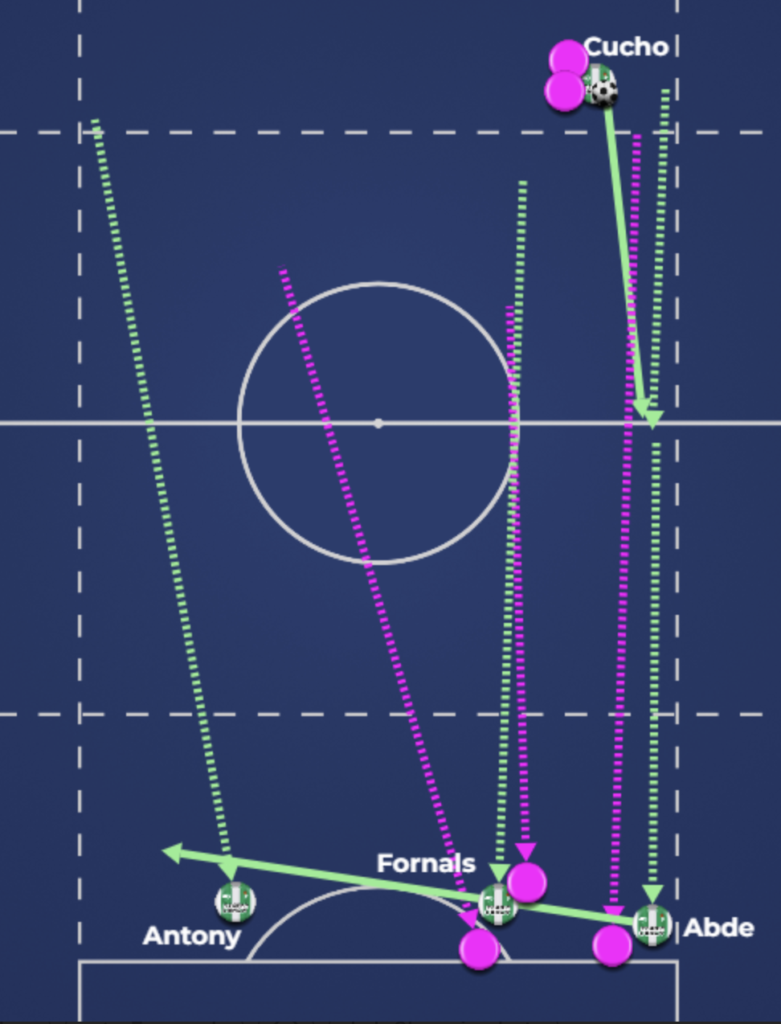
As centre-forward Juan “Cucho” Hernández held the ball up and prepared to play the pass into winger Abdessamad Ezzalzouli (a.k.a. Abde), midfielder Pablo Fornals and winger Antony began their forward runs in parallel into the opposition half without waiting for the ball to reach Abde.
By the time Abde carried the ball all the way into the opposition penalty area, Betis had created a 3v3 situation against the defensive line. The opposition defender naturally stayed close to Fornals in the central lane, which left Antony free on the far side. However, because the final pass was played behind Antony, Betis were unable to finish the counter-attack.
2. Clearing the Lane
The opposition lost possession inside the Betis penalty area. As Antony played the ball to right-back Héctor Bellerín, Cucho moved towards the right side together with the defender tracking him.
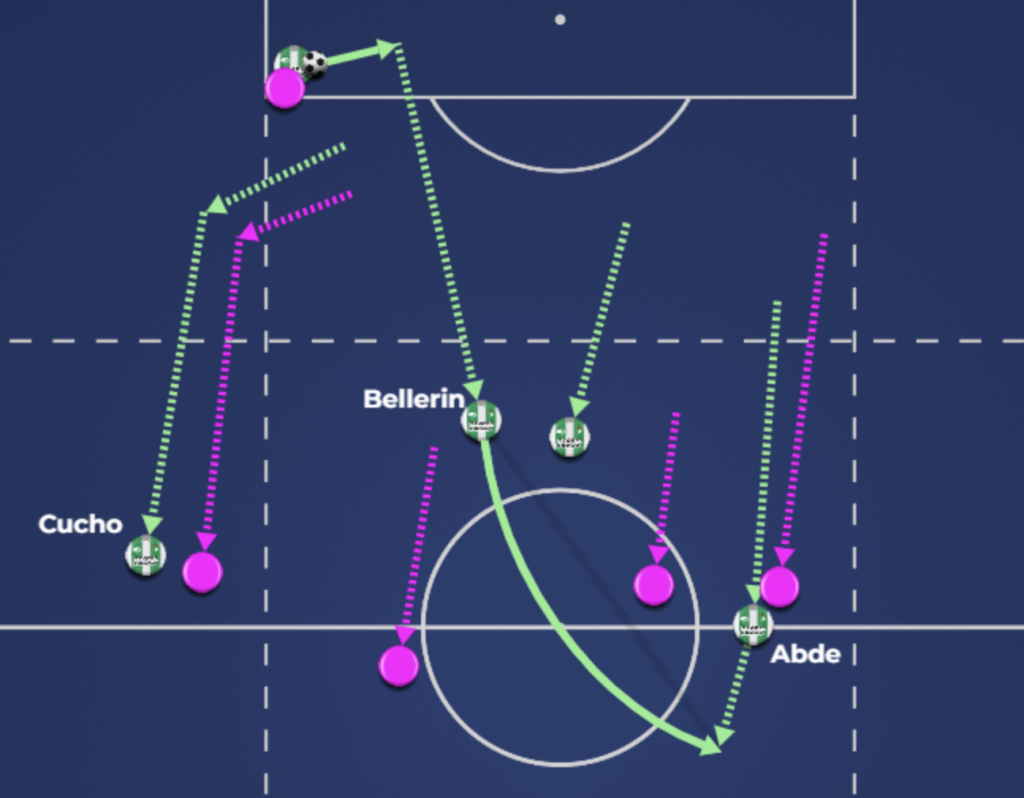
This movement cleared the space in front of Bellerín, allowing him to carry the ball forward up to the halfway line. At the same time, Abde made a very quick supporting run towards the halfway line.
Bellerín then played an excellent through pass, releasing his teammate into the space behind the opposition defence in the attacking half. Since Abde had started his run from his own half, he did not have to deal with any offside issue.
3. Pre-Transition Setup
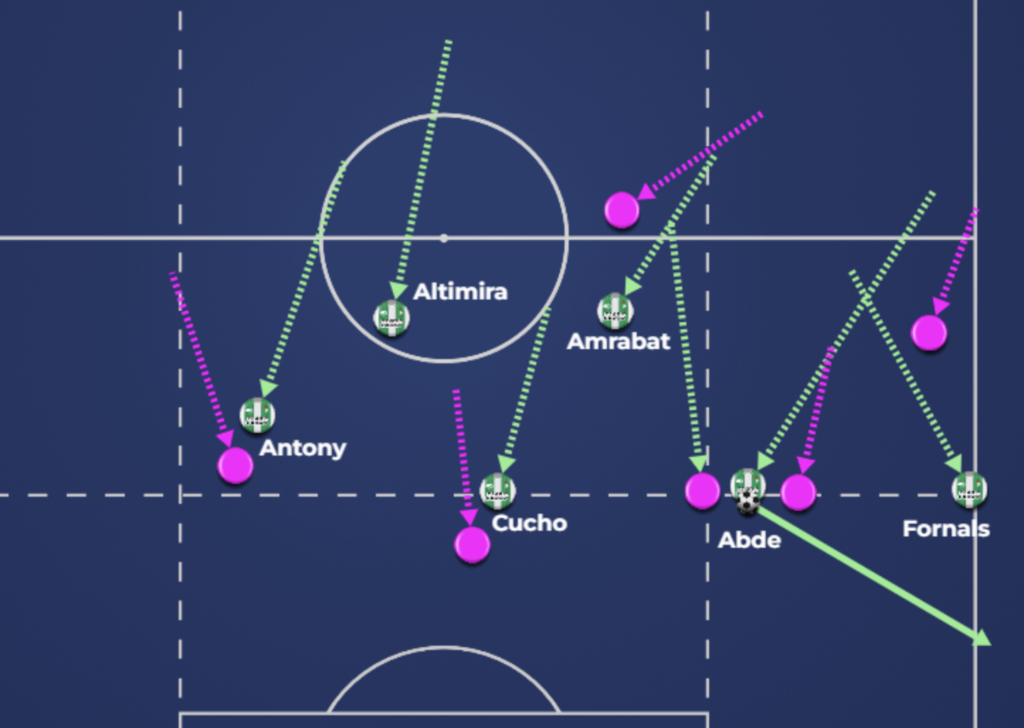
What I want to highlight here is a counter-attack that ended before it could fully develop. However, the positioning and tactical structure were very correct.
As the opposition centre-back played the pass towards the right-back, Abde was already positioned in front of the opposition full-back. Midfielder Sofyan Amrabat was behind the ball, positioned at an equal distance from two opposition players. If the ball had been played into either of them, he would have been ready to press immediately.
The other midfielder, Sergi Altimira, was positioned deeper, but as soon as Betis won the ball, he moved forward together with Amrabat. While Abde won possession and carried the ball inside towards the central lane, Fornals moved out to the left to offer a passing option.
The counter-attack ended because the pass was inaccurate. However, forcing the opponent back towards their own penalty area and then attacking in transition with a 4+2 structure can significantly increase the probability of success.
4. Third-Man Timing Run
Abde holds the ball. Aitor Ruibal, Cucho and Antony were positioned on the same line, with one opposition player in front of them.
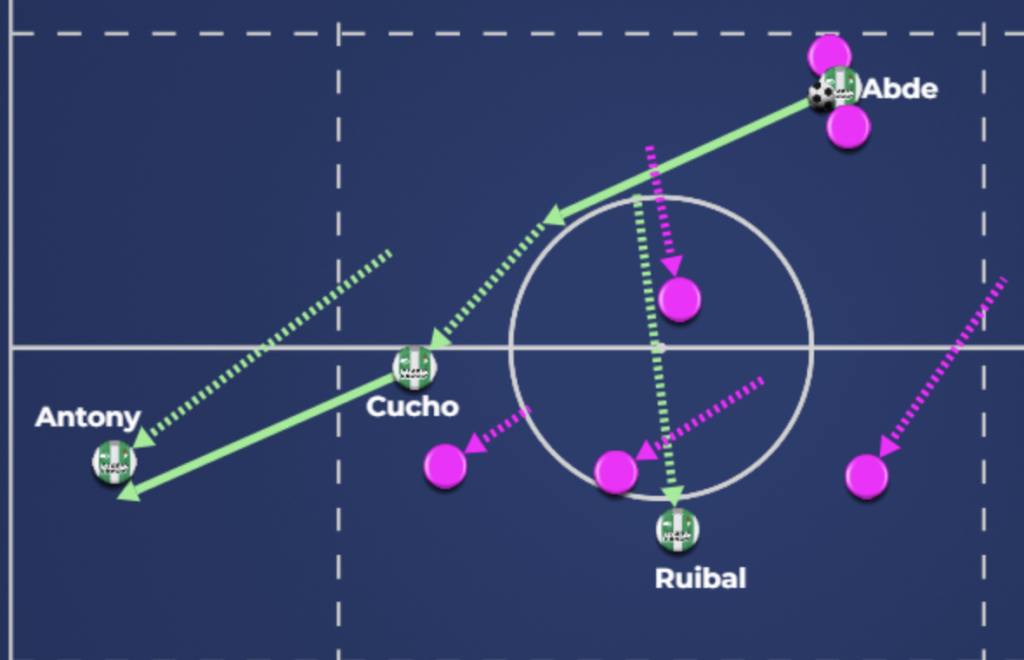
Ruibal made a forward run, creating space for the two teammates behind him. When the ball was played into Cucho, Antony adjusted his movement to avoid being caught offside, while the opposition defenders also moved in a controlled way to try to hold him in an offside position. Ruibal, however, continued his run without being affected by that situation. By the time the ball was played to Antony, Ruibal had stayed behind the ball while also managing to get beyond the defensive line.
5. Exploiting the Far Side
When teams defend against counter-attacks, they often try to protect the central areas and prevent the opponent from entering the penalty area through the middle.
In this situation, the opposition did exactly that. Betis responded by using the wings. When the ball was with Antony, one Betis player was arriving from the right side, while two players were attacking from the left. As one of the two players on the left moved towards the central lane, the winger on the left became free. However, Antony’s pass was intercepted by the opposition defender, and the attack could not be completed.
6. Rotating Runs, Releasing Cucho
Antony intercepted the ball in midfield and played it into Cucho.
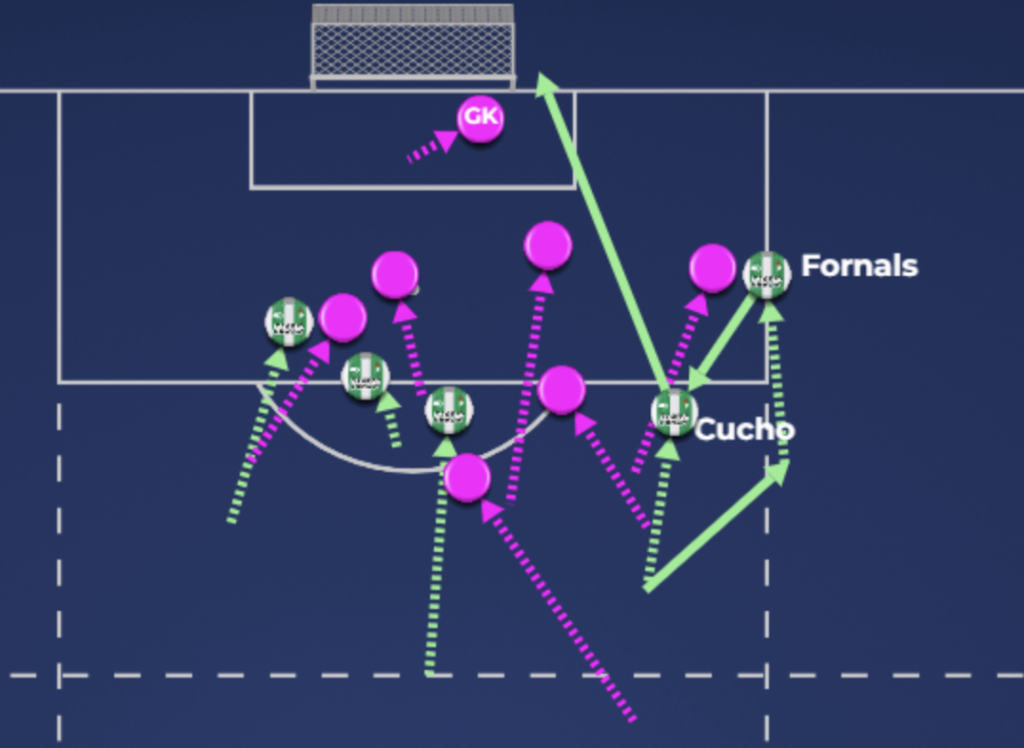
As Betis broke forward, the players joining the counter-attack made runs in different directions in order to disrupt the opponent’s defensive balance. Cucho then played the pass to Fornals, who had initially started on the left side before moving across to the right. In that area, three opposition players seemed to think that Cucho had moved away from the danger zone, so they left him unmarked. Fornals played the ball back to Cucho. Although one opponent moved out to close him down, Cucho was still able to get his shot away.
7. Recognizing the Free Runner
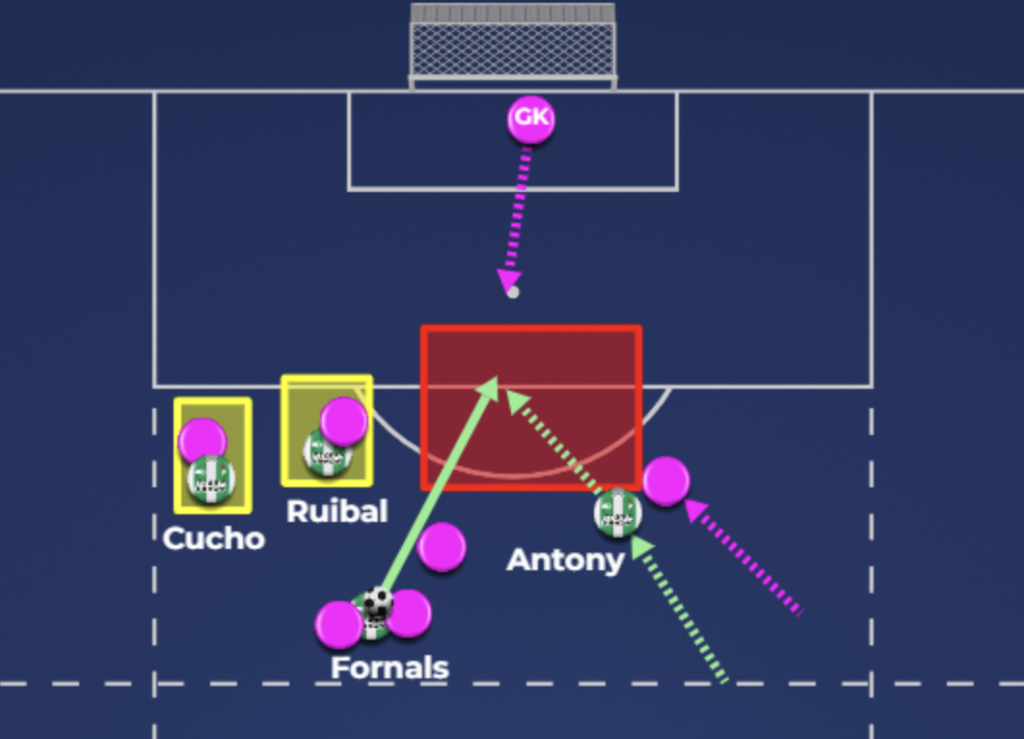
After Betis pressed the goalkeeper, the clearance was poor, allowing Fornals to step in, intercept the ball and regain possession.
Normally, Cucho and Ruibal would have immediately made forward runs. However, because there was a large space behind the centre-back in front of Fornals, and because they could see Antony attacking that space, they chose to remain passive alongside the defenders rather than making unnecessary movements. As Antony entered the penalty area, Fornals played the through pass into his path, releasing him into a 1v1 situation against the goalkeeper.
8. Side Exit to Direct Break
Midfielder Giovani Lo Celso won the ball inside his own penalty area and played it to the other midfielder, Marc Roca. Fornals noticed that the three players in front of Roca were closing the central space, so he moved out to the right side to offer a passing option.
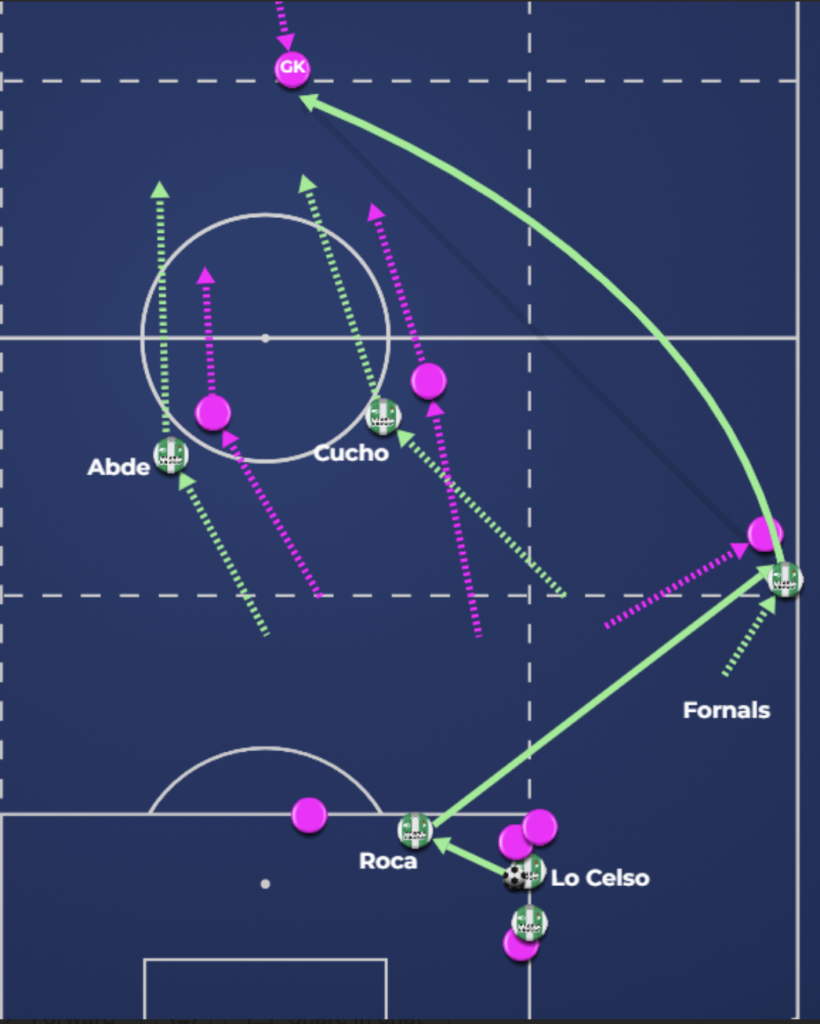
As Roca played the ball into Fornals, Cucho and Abde immediately started their 2v2 run towards the opposition half. Fornals’ long pass was successful. Because the ball was played between the two defenders, Cucho had the advantage in the race. However, the goalkeeper had already anticipated the danger and came off his line early, clearing the ball before it could reach Cucho.
9. Baiting the Pass
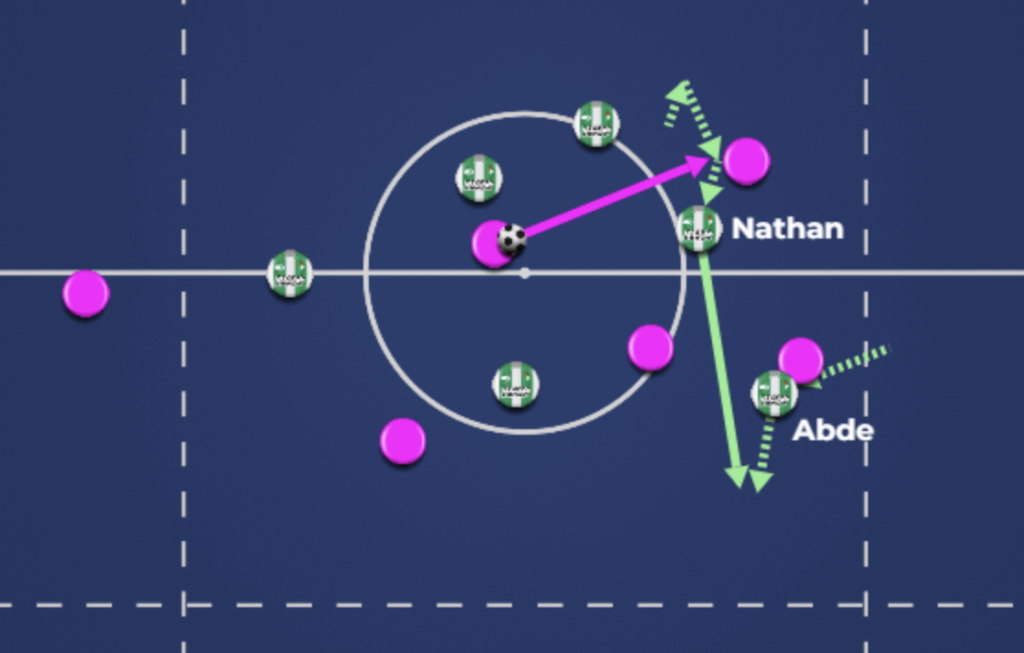
As the opposition were circulating the ball in the middle, centre-back Natan slightly moved away from the player next to him.
Seeing this separation, the player in possession attempted to play the pass into that area. However, Natan stepped in, intercepted the pass and won the ball. Abde immediately recognised that the opposition defensive line was not properly organised and started his forward run. Natan then carried the ball for a few metres before playing a through pass into Abde. This allowed Abde to receive the ball inside the penalty area and create a 1v1 shooting opportunity against the opposition defender.
In my view, Natan’s movement — first dropping away and then stepping forward aggressively — looked intentional. By creating the impression that the passing lane was open, he effectively encouraged the opponent to play into that space and then punished them by intercepting the ball.
10. Dual Diagonal Options
Abde received the ball in his own half and carried it into the final third. The diagonal runs made by Fornals and winger Rodrigo Riquelme offered him two different attacking options.
Abde chose Fornals, who was making the run into the penalty area. Fornals could not make clean contact with the ball, but the decision was still worth attempting.
Riquelme’s run towards the in front of the box was also valuable in a counter-attacking context, as it positioned him to attack any possible rebound or second ball coming out of the box.
11. Overcommitted, Then Exposed
In the second half, with the score level, the opposition made a major mistake.
While the game was being played in the second zone, they pushed almost all of their players forward and positioned themselves close to the Betis penalty area.
When the opposition centre-back played the pass, Fornals got a touch on the ball and it dropped in front of Roca. Forward Cédric Bakambu immediately started his run into the opposition half without even needing to check the defensive line.
As usual, the second run was not neglected either, with Abde also joining the attack. Roca then played an aerial pass forward, creating a 2v1 goal-scoring opportunity for Bakambu and Abde.
12. Blind-Side Arrival
As Isco played the pass in behind the defensive line, the defenders appeared to think the ball was intended for Bakambu and reacted slowly. However, Abde arrived from a deeper position to receive the ball, which allowed Betis to avoid the offside situation.
They also used the diagonal run pattern mentioned earlier. Bakambu was not offside because the defender who stepped out to confront Abde was keeping him onside.
Because of that, the defenders did not even recognise Riquelme arriving from deeper towards the in front of the box. Their attention was drawn towards Bakambu, who was completely free in front of the goalkeeper. As a result, when the ball arrived to Riquelme, he was able to take the shot comfortably.