


Manuel Pellegrini is a manager who still does not get the respect he deserves. For decades, the Estadio Benito Villamarín was chasing the shadow of its city rival Sevilla, a club that had become a consistent European force and built an entire modern identity around its Europa League success. Even Betis’ traditional mantra, “Viva er Betis manque pierda” or “Long live Betis even if they lose,” reflected a romanticized acceptance of suffering.
When the Chilean arrived in August 2020, the Verdiblancos were a fractured institution fresh off a dismal 15th-place finish. Fast forward to May 2026, and the landscape in the green half of Seville is almost unrecognizable. Real Betis are no longer just the romantic underdogs of Andalusia. Under Manuel Pellegrini, they have become one of the most stable, intelligent, and consistently competitive teams in Spanish soccer.
The Impact Of Manuel Pellegrini
Real Betis finished in the top six only once in their previous 12 seasons before Manuel Pellegrini’s arrival. Since he took over, they have never finished outside the top six. That alone explains the scale of the transformation. Before Pellegrini, Betis were capable of producing beautiful moments, but rarely capable of sustaining a serious project. Since his arrival, they have gone from being a talented but unstable team to one of La Liga’s most reliable European contenders.
In his early days, Betis relied heavily on players like Sergio Canales and Nabil Fekir for individual moments of brilliance. While that approach was effective in bursts, it was always vulnerable to injuries, form dips, and the emotional chaos that had often followed the club. By the 2025/26 campaign, Pellegrini had fully installed his own identity into the team, and remnants of that identity can be seen everywhere from the transfer market to the performances on the field.
No longer content with basic control and passive play, Betis now use the ball to provoke. Opponents are baited into pressing, creating organized spaces for Betis to exploit through passing angles. The traditional 4-2-3-1, or at times a free-moving 4-3-3, remains the blueprint, but its application is incredibly fluid. The midfield pivot can drop to help progression, the attacking midfielders rotate between lines, and off-ball movement has replaced isolated dribbling as the primary method of penetration into the final third.
Defensively, the transformation is equally clear. Pellegrini has established a mid-block that prioritizes spatial compactness over chaotic high pressing. By suffocating the central channels, Betis force opponents wide into areas where they can manage the rhythm of the game more comfortably.
Manuel Pellegrini Masterclass In The Market
A manager is only as good as the tools at his disposal, and Pellegrini has worked in perfect harmony with the board to execute some of the smartest transfer business in Europe. Operating without the financial muscle of Barcelona or Real Madrid, Betis have relied on niche recruitment, targeting distressed assets, tactical fits, and highly motivated veterans looking for redemption.
Take Pablo Fornals, for example. Operating creatively between midfield and attack, Fornals has been nothing short of sensational, registering eight goals and six assists while dictating the offensive tempo during the 2025/26 season.
Behind him, the acquisitions of Marc Roca and Sofyan Amrabat on loan have given Betis a strong midfield foundation, allowing the forwards the freedom to express themselves without leaving the back door unlocked.
But it is the forward line overhaul that truly reflects Pellegrini’s vision at the club. Recognizing the need for verticality and raw output, Betis brought in Colombian striker Cucho Hernández and Brazilian winger Antony under him. Cucho has led the line as a ruthless, mobile finisher, scoring 15 goals this season.
Antony, revitalized under Pellegrini after a horror stint at Manchester United, has silenced his critics and won over the Betis faithful. Complementing these additions is the continued rise of Abde Ezzalzouli, who has become one of La Liga’s most feared wide players.
At the back, the integration of Brazilian center back Natan alongside Diego Llorente and Héctor Bellerín has solidified the defensive line. Guarded by the reliable Álvaro Valles in goal, Betis have built something special that Los Heliopolitanos had not seen in years.
A Taste Of European Glory
Perhaps the most incredible statistic from Manuel Pellegrini’s tenure is that he has managed to qualify Real Betis for European competition in every single season in charge.
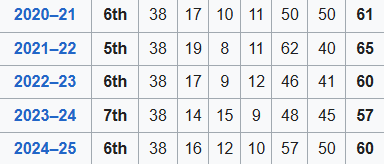
After multiple Europa League and Conference League campaigns, Pellegrini has now secured the holy grail for Betis: the UEFA Champions League. But before setting their sights on Europe’s premier competition, Real Betis first had to prove they could navigate a deep continental run. That proving ground arrived during the 2024/25 UEFA Conference League campaign, a historic journey that ended with an agonizingly close shot at a European trophy.
Pellegrini navigated the newly implemented 36-team league phase well, rotating his squad effectively to balance La Liga ambitions with European progression.
The star of this campaign was captain Isco. The veteran playmaker experienced a renaissance, just like Antony. His efforts earned him the prestigious UEFA Conference League Best Player award for the tournament.
The final itself, held on May 28, 2025, pitted Betis against an English juggernaut in Chelsea. Despite a valiant, hard-fought effort, the financial and squad-depth disparity eventually showed. Chelsea claimed a 4-1 victory, driven by goals from Enzo Fernández, Nicolas Jackson, Jadon Sancho, and Moisés Caicedo. However, the defeat in Wrocław was absolutely not viewed as a failure back in Seville.
Reaching a major European final validated Pellegrini’s entire project. It showed that Betis were not just a nice La Liga story or a team capable of occasional upsets. They were a serious European side, built on a foundation strong enough to compete beyond Spain. That final became less of an ending and more of a stepping stone toward the next stage of the project.
The Big One: Real Betis In The Champions League
Following the heartbreak and motivation of the Conference League final, the objective for Real Betis was clear. They had to keep improving. They had to take the next step. That ambition has now been realized with their push into the UEFA Champions League.
Real Betis under Manuel Pellegrini have qualified for the Champions League for the first time in 21 years, securing a massive top-five finish with an impressive 57 points across 37 matches. For a club that had spent so many years living between chaos, romance, and inconsistency, this feels like the proper culmination of a project nearly six years in the making.
In fact, this is one of the longest spells, if not the longest spell, Pellegrini has spent at one club. That matters. The board backed him and gave him time. The players bought into his ideas and played their hearts out for him. The fans, who had seen enough false dawns over the years, finally had a project that rewarded their patience.
Now, the foundation is firmly set. The stadium infrastructure is elite as Betis renovate the Benito Villamarín, the financial health of the club has been stabilized by consistent European revenue, and the squad depth points toward a bright, sustainable future.
Manuel Pellegrini has woven his magic in Triana, and The UEFA Champions League anthem is finally going to be ringing in every little Betico household.

Abhik Deb is an accomplished sports journalist and content creator, renowned for his innovative approach to digital storytelling within the football world. With a Master’s degree in Sports Journalism and Communications from Universidad Europea de Madrid, Abhik brings a sophisticated understanding of both traditional journalistic tenets and contemporary digital media strategies to his work. His professional journey includes a significant tenure as a multimedia journalist at Real Madrid C.F., where his contributions spanned video editing, scriptwriting, and on-camera presenting. Notably, Abhik made history as the first Indian to record a live stand-up from the hallowed Santiago Bernabéu pitch for Real Madrid TV, underscoring his pioneering spirit and influential presence. A specialist in La Liga and Spanish football, Abhik excels at captivating audiences through viral football content and insightful documentary-style videos. His natural ability to blend rigorous journalism with creative digital storytelling is evident in his independent fan channel, ‘LaLigaVic,’ where he cultivates a growing audience through engaging, original coverage of Spanish football culture. Abhik’s proficiency extends to social media strategy and audience engagement, crucial skills in today’s digital landscape. You can explore more of Abhik’s work on Hooligan Soccer and Muckrack. Connect with Abhik on Instagram, LinkedIn, and YouTube to follow his continuous dedication to delivering high-quality, authoritative sports content.