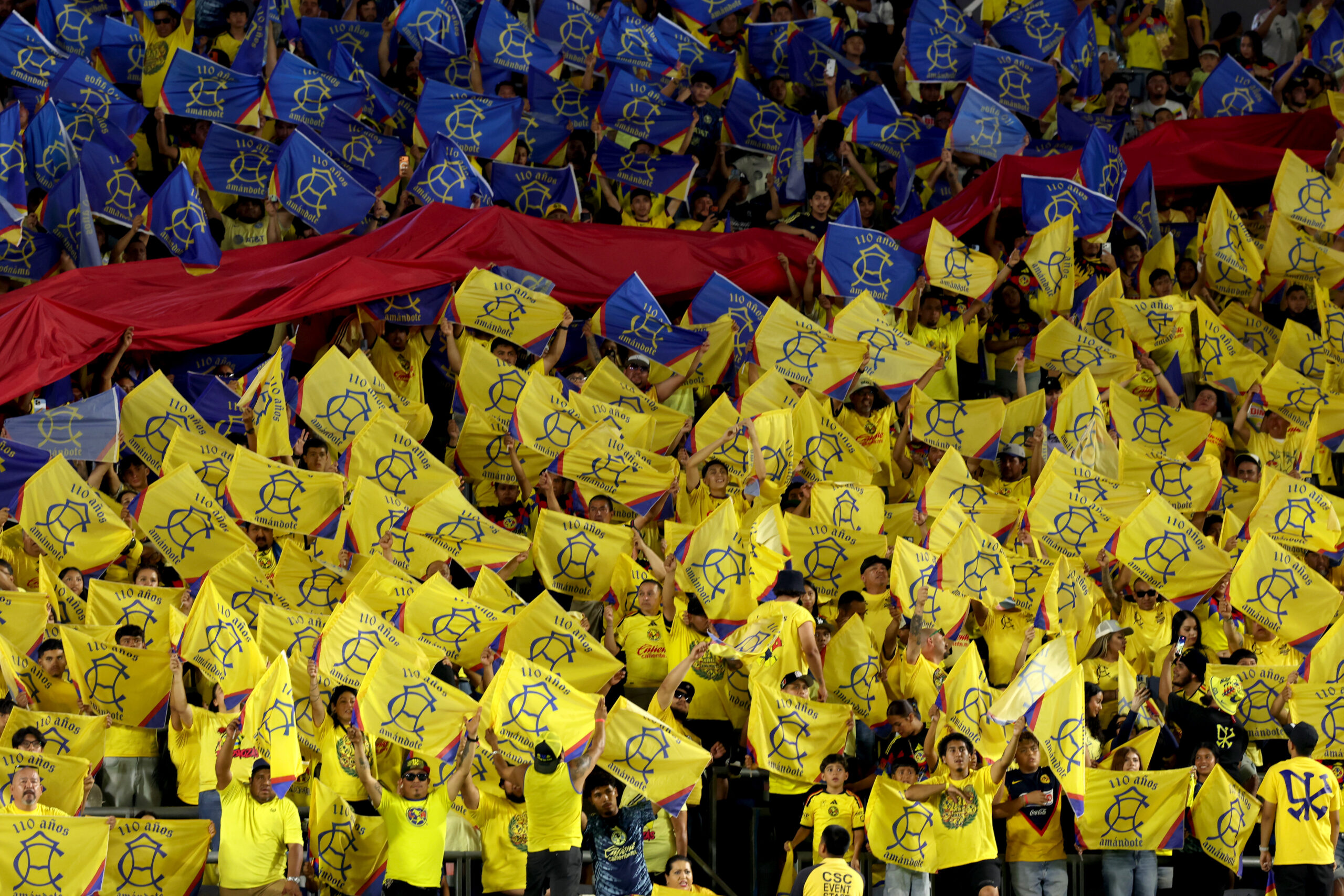

In Mexican football, winning titles makes you a giant. Winning titles while making everyone else lose their minds? That’s the América business model. As Las Águilas celebrate 110 years of existence, their history is a story of trophies, icons, controversy and an almost supernatural ability to make themselves the main character, whether they win, lose or simply walk into a stadium.
Love them or hate them, ignoring Club América is practically impossible. For their supporters, they are the standard everyone else should aspire to reach. For their rivals, they are the villains of a never-ending football soap opera, a club accused of receiving favorable treatment, spending more than everyone else and somehow always finding its way back to the top.
América have spent decades embracing that reputation. They are the team everyone wants to beat, the team everyone talks about and, perhaps most importantly, the team whose failures are celebrated almost as enthusiastically as other clubs’ victories.
That is the América paradox: being the most successful club in Mexican football also means becoming the most convenient target for everyone else’s frustrations.
And on October 12, 1916, nobody could have imagined just how loud the arguments would become.
From a schoolyard idea to a national obsession
América’s story began on October 12, 1916, when two groups of students united their teams, Récord and Colón, to create a new football club. The young men behind the project were cousins Rafael Garza Gutiérrez, nicknamed “Récord,” and Germán Núñez Cortina, students at Colegio Mascarones in Mexico City.
Their ambition was simple enough: bring together talented players and build a competitive team.
They certainly got more than they bargained for.
What started as a student project eventually evolved into one of the most influential sporting institutions in Mexico. The club would go on to attract millions of supporters, develop legendary players, collect trophies across generations and become the ultimate measuring stick for its domestic rivals.
Not bad for a group of students who probably weren’t planning to spend the next century arguing with Chivas fans.
Emilio Azcárraga and the business of becoming América
The turning point arrived in 1959, when businessman Emilio Azcárraga Milmo acquired the club. His ambition was to transform América into a major sporting institution, one capable of competing at the highest level and attracting attention far beyond the pitch.
The strategy went beyond signing players and chasing championships. América needed an identity, a powerful public image and a rivalry capable of turning ordinary league fixtures into national events.
The growing feud with Guadalajara became central to that vision. The Clásico de Clásicos emerged as one of Mexican football’s defining occasions, a contest that offered much more than three points.
For América, beating Chivas became a statement. For Chivas, beating América became a matter of pride. Everyone else got to pick a side and spend the following week arguing about referees, budgets and who supposedly represents the soul of Mexican football.
Azcárraga helped establish a club that understood something fundamental about modern sport: winning matters, but owning the conversation is pretty useful, too.
1965-66: The first professional league crown
América finally claimed its first league championship of Mexico’s professional era in the 1965-66 season, defeating Veracruz to secure the title.
It was a landmark achievement that helped establish the club as a serious force in the national game. The trophy gave América something more substantial than ambition and a growing reputation: proof that the project could deliver on the pitch.
But the first championship was only the beginning. The club was about to enter a period in which winning would become more than an objective. It would become an expectation.
And expectations at América have rarely been modest.
José Antonio Roca, Carlos Reinoso and the birth of a winning identity
If the 1960s established América as a champion, the 1970s helped define what the club wanted to represent.
Under coach José Antonio Roca, Las Águilas developed a more distinctive personality. Players such as Carlos Reinoso and Enrique Borja became central figures in a generation that helped turn the club into a genuine powerhouse.
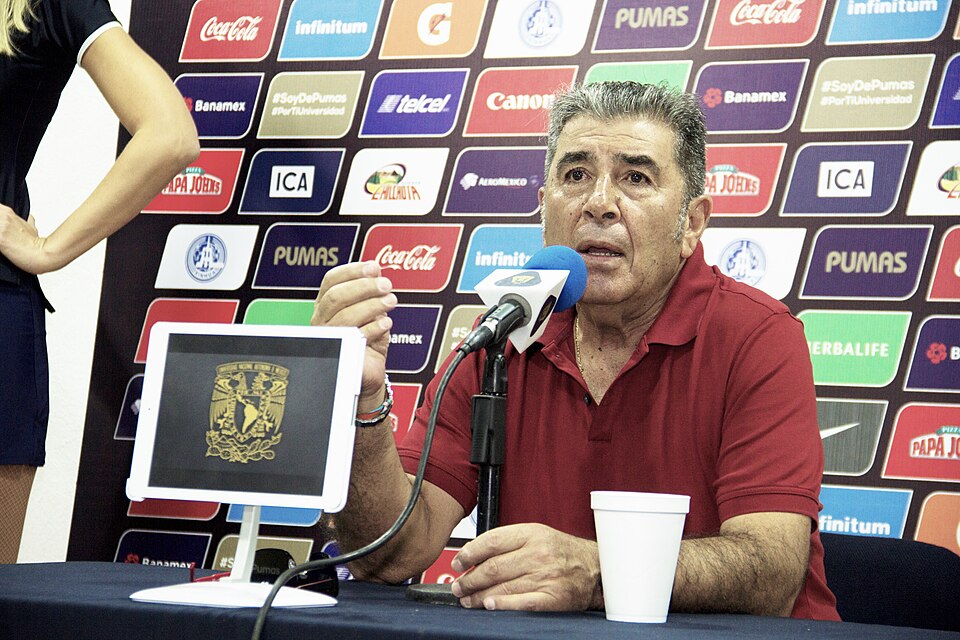
América won league titles in the 1970-71 and 1975-76 seasons, building a team that combined technical quality with the confidence to take center stage.
Roca’s América didn’t merely want to win. It wanted to dominate, entertain and make sure everybody knew who had won. That attitude would become a defining feature of the club’s identity. To supporters, it was ambition and character. Rivals considered it arrogance. To América, the distinction probably depended on the final score.
The 1980s: When the Eagles ruled Mexican football
The 1980s elevated América into an entirely different category.
The club captured three consecutive league championships across the 1983-84, 1984-85 and Prode 1985 competitions, followed by another pair of titles in 1987-88 and 1988-89.
It was a remarkable run that established América as the dominant force of its era and produced some of the most memorable teams in Mexican football history.
One of the defining moments came in the 1984 league final against Chivas. América prevailed in a heated series that became one of the most celebrated chapters in the rivalry, with goalkeeper Héctor Miguel Zelada’s penalty save securing his place in club folklore.
The decade delivered silverware, unforgettable players and an increasingly familiar sight: América lifting a trophy while half the country looked for someone to blame.
By the end of the 1980s, the club had accumulated eight professional-era league championships and firmly established itself among Mexico’s elite.
The message was clear. América wasn’t interested in simply joining the conversation about greatness. It wanted to control it.
The race for supremacy: Cruz Azul, Chivas and the number 12
For years, Mexican football’s historical championship race was dominated by the battle between América and Guadalajara.
That competition reached another turning point in the 2013 Clausura, when América defeated Cruz Azul in one of the most dramatic finals in Liga MX history. The championship brought Las Águilas to 11 league titles, matching Chivas’ historical total.
América then took the lead outright in the Apertura 2014, winning its 12th league championship and moving ahead of Guadalajara.
The advantage, however, didn’t last forever.
Chivas won the Clausura 2017, drawing level with América at 12 titles. Suddenly, the historical race was tied again, and the rivalry had another reason to dominate every debate about Mexican football.
América responded in the Apertura 2018, defeating Cruz Azul in the final to collect its 13th league crown and reclaim sole possession of the record.
There is a recurring theme here: whenever somebody catches América, the club seems to treat it as a personal invitation to spoil the party.
The Jardine era: Three straight titles and a new chapter of dominance
The latest chapter began with América’s 14th league championship in the Apertura 2023.
Under Brazilian coach André Jardine, Las Águilas followed that triumph with back-to-back championships in the Clausura and Apertura 2024, becoming the first club to win three consecutive Liga MX short-tournament titles.
It was a historic achievement that reinforced América’s status as the league’s benchmark. Three championships in succession also meant another round of celebrations in one half of the country and another round of collective despair in the other.
The achievement was about more than a trophy count. América demonstrated an ability to sustain its dominance through different opponents, tactical challenges and the relentless pressure that comes with being the team everyone wants to knock off its perch.
The club’s appeal has always depended on more than winning, but winning remains the most effective way to keep the whole country talking.
And for a club approaching its 110th anniversary, the modern era has offered a familiar reminder: the Eagles don’t need everyone to love them. They just need everyone to keep watching.
The icons who built the América mythology
Every giant needs its legends. América’s history is packed with players whose names remain part of the club’s identity.
Luis Roberto Alves ‘Zague’
With 162 goals, Zague stands as América’s all-time leading scorer. His goalscoring record and achievements across domestic and international competitions made him one of the most important attacking figures in the club’s history.
Carlos Reinoso
For many supporters, Reinoso represents the ideal América footballer: technically gifted, commanding and capable of taking over a game. The Chilean became a club legend as a player and later added another chapter to his legacy as head coach.
Cuauhtémoc Blanco
Blanco was never a footballer designed to please everybody. Brilliant, provocative and fiercely competitive, he became one of the defining Mexican players of his generation and a modern América icon. His personality made him a hero in Coapa and a nightmare for opposing supporters.
Héctor Miguel Zelada
The Argentine goalkeeper became a central figure in América’s successful 1980s teams. His performance in the 1984 final against Chivas, particularly his decisive penalty save, remains one of the great moments in club folklore.
Alfredo Tena, ‘El Capitán Furia’
A defensive leader and symbol of the club’s competitive spirit, Tena embodied the toughness associated with América’s championship-winning generations. He became one of the most respected figures in the club’s history.
Arlindo dos Santos
The Brazilian forward holds a special place in Mexican football history for scoring the first goal at the Estadio Azteca in 1966. His name remains connected to the opening chapter of one of the country’s most iconic sporting venues.
These figures helped turn América from a successful team into a club with a mythology of its own. Their legacies continue to shape what supporters expect and what rivals dread.
The trophy cabinet: 110 years of collecting silverware
América’s success can be measured in memories, rivalries and legendary performances. It can also be measured in the trophies that have made the club a permanent reference point in Mexican football.
According to the historical tally provided for this anniversary feature, the club’s collection includes 40 official titles, divided into domestic and international competitions. That count should be treated as a specific historical tally, since totals can vary depending on the competitions and classifications included.
Domestic honors
- Liga MX / Mexican First Division: 16 league titles.
- Copa México: 6 titles.
- Campeón de Campeones: 7 titles.
- Liga MX Super Cup: 1 title.
International honors
- CONCACAF Champions Cup: 7 titles.
- Interamerican Cup: 2 titles, won in 1978 and 1991.
- CONCACAF Giants Cup: 1 title, won in 2001.
- Campeones Cup: 1 title, won in 2024.
The individual figures above should not be added together as if they were a verified, internally consistent total: they sum to 42, rather than 40. The overall count and competition breakdown therefore need to be reconciled before publication.
There is also a distinction between official senior trophies, league championships and titles from the amateur era. For a club whose history is constantly used as ammunition in arguments with rival supporters, getting those numbers right is part of the job.
110 years later, América is still América
The story of Club América is ultimately about more than championships. It is about the transformation of a student football team into a national institution, the development of a powerful identity and the creation of a rivalry culture that has shaped Mexican football for generations.
From the early days of Garza Gutiérrez and Núñez Cortina to the championship teams of Roca, the icons of the 1980s and Jardine’s historic three-peat, every era has added another layer to the club’s reputation.
América has been celebrated as the standard of excellence and condemned as the villain of the story. It has inspired generations of supporters, provoked endless arguments and given its rivals an almost inexhaustible supply of reasons to dislike it.
But that is part of the point.
A club doesn’t become a national obsession by being universally agreeable. It becomes one by winning, creating unforgettable moments and remaining impossible to ignore.
On October 12, 2026, América turns 110. The celebrations will be blue and yellow, the trophy cabinet will provide plenty of talking points, and somewhere across Mexico, rival supporters will undoubtedly find something to complain about.
The Azulcremas probably wouldn’t have it any other way.
Happy 110th birthday, Club América. Love them, hate them, accuse them, celebrate them. Just don’t pretend Mexican football would be the same without them.
We also recommend: https://hooligan-soccer.com/can-jurgen-klopp-fix-what-a-decade-of-decline-has-broken-in-germany/

Alejandro Orellana is an accomplished sports journalist based in Mexico City, known for his incisive coverage of Club América and the Mexican National Team. A graduate of Journalism from Escuela de Periodismo Carlos Septien García, Alejandro brings a deep understanding of sports media to his work. His expertise extends to SEO and content creation, allowing him to produce engaging and discoverable sports narratives. He has contributed as a freelance writer for Goal.com, where he notably conducted interviews with MLS players, further showcasing his comprehensive interviewing skills. Prior to this, Alejandro dedicated five years to ESPN’s production department, contributing to renowned shows including SportsCenter, Futbol Picante, and NFL Live. His insightful articles can be found on platforms such as Deportrece and Hooligan Soccer. Connect with Alejandro on @soyalexorellana and Tik Tok to stay updated with his latest work. His commitment to journalistic integrity ensures every piece offers valuable and trustworthy insights for sports enthusiasts.