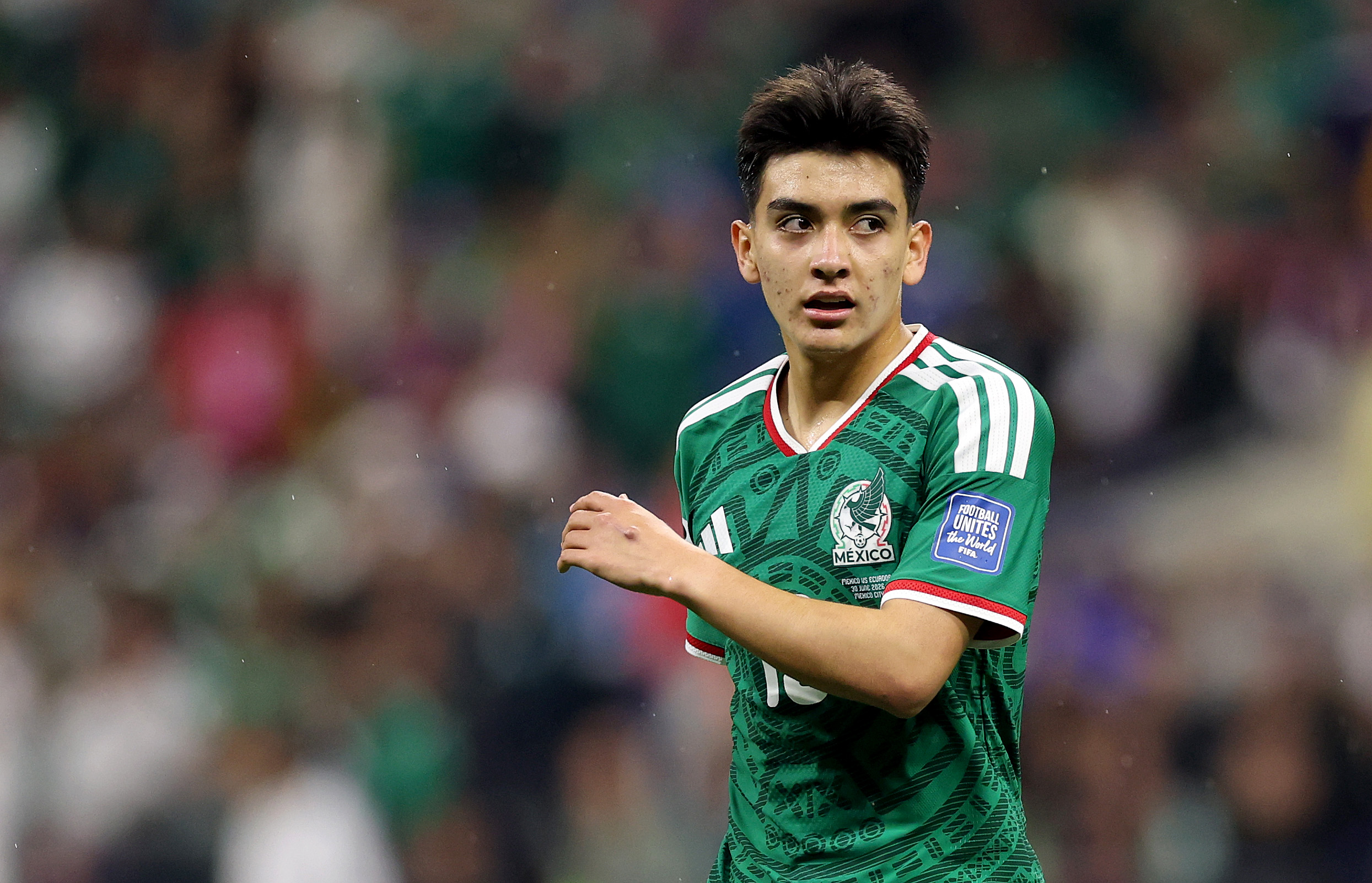

A new era is underway for the Mexican national team.
The post-World Cup, post-Javier Aguirre chapter has officially begun, and Rafa Márquez is already opening the door for a new generation of players who could define Mexico’s next World Cup cycle.
It is a curious mix: some youngsters already have a World Cup under their belt, while others are getting their first real taste of senior international football. In other words, Mexico are trying to build the next generation while still keeping a few veterans around to make sure the kids don’t completely burn the house down.
The current squad has an average age of 25.8 years, with 12 players aged 23 or younger.
There are still plenty of familiar faces in the squad, including Hirving Lozano, Germán Berterame, Johan Vásquez, Álvaro Fidalgo and Jesús Gallardo. At the same time, Márquez is without several established names, including Raúl Jiménez, and Edson Álvarez. César Montes was forced to leave camp after suffering an injury.
Then there is Julián Quiñones, one of Mexico’s standout performers at the 2026 World Cup, who is also absent this time around.
And that is where things get interesting. With Mexico entering a new cycle, Márquez has decided to look beyond the usual suspects.
- Gilberto Mora brings vision and explosiveness;
- Hugo Camberos offers pace and directness;
- Santiago Sandoval provides late runs from midfield;
- Armando González, now at Olympiacos, brings speed and intelligent movement behind the defense.
These are the kinds of players Mexico will be hoping can grow into major pieces of the national team before the next World Cup arrives.
The bridge between generations
The middle generation could be just as important.
Santiago Giménez, Johan Vásquez, César Montes and Álvaro Fidalgo, all between 25 and 29, represent the bridge between the established veterans and the teenagers knocking on the door. They are old enough to understand what international football demands, but young enough to potentially remain central to the project for years to come.
That balance will be one of Márquez’s biggest challenges: developing the kids without throwing them into the deep end and pretending they are already finished products.
Goalkeepers: a new look
With Guillermo Ochoa also out of the picture for this camp, Márquez has opened the door to two 23-year-old goalkeepers. Álex Padilla, of Athletic Club, has been called up, while Óscar García receives his first opportunity with the senior national team.
Neither name is completely unfamiliar. Both had previously been included in Javier Aguirre’s squads, but their presence now stands out because they have been given the nod ahead of more experienced options such as World Cup goalkeeper Carlos Acevedo.
For Mexico, it is another sign that the goalkeeper competition is far from settled.
Defense: new faces, new options
The defensive line also comes with some fresh blood.
Víctor Guzmán, Everardo López and Diego Campillo are the three new additions in defense. Guzmán and López provide options on the left, while Campillo gives Márquez another possibility in central defense.
Then came another change after César Montes left camp with a glute injury. Márquez called up Dagoberto Espinosa, the 22-year-old América full-back, giving him his first senior Mexico call-up.
So, when one experienced center-back leaves the building, Mexico replace him with another youngster knocking on the door. That pretty much sums up the current mood around this national team.
Midfield: the future is already here
The midfield features several players who are not exactly new to the national team, but could become the faces of Mexico’s future.
The obvious headline is Gilberto Mora, the teenage Xolos star who has now been handed Mexico’s iconic No. 10 shirt. No pressure, obviously. Alongside him are players such as Obed Vargas, who continues to emerge as an important young option, while Alain Cervantes was also initially called up before suffering a foot injury that forced him to leave camp.
The idea is clear: Mexico are beginning to test the players who could potentially carry the midfield into the next World Cup cycle.
Attack: the kids are coming
The biggest changes can be found up front.
With Raúl Jiménez and Julián Quiñones unavailable, Márquez has had to look elsewhere for attacking options. That has opened the door for Hirving Lozano, currently playing for LA Galaxy, to return to the national team. But the real intrigue comes from the younger attackers.
Hugo Camberos
At just 19, Camberos was one of the standout players during the U-20 tournament that helped Mexico qualify for the Olympics, with El Tri eventually beating the United States in the final.
He received his first senior-team call-up last month, and now he has another opportunity to show Márquez that he belongs in the conversation going forward. If everything goes according to plan, Camberos would arrive at the next World Cup at just 23 years old. That is precisely the kind of timeline Mexico should be looking at right now.
Santiago Sandoval
Another 19-year-old making noise is Santiago Sandoval. The Chivas youngster has been enjoying an impressive season and has earned his first opportunity with the senior national team. He may not immediately become a starter, and nobody should expect him to suddenly solve all of Mexico’s attacking problems before breakfast.
But the call-up itself is significant.
It shows that Márquez is paying attention to young players performing consistently in Liga MX, while also taking advantage of the absences of Quiñones, Alexis Vega, Jiménez and others. Sandoval is another player who could potentially be entering the national-team picture years earlier than expected.
Isaías Violante
Then there is Isaías Violante. The 22-year-old is the kind of player every coach wants to have somewhere in the squad: explosive, aggressive, capable of shooting from distance and able to play both in midfield and further forward.
He is not the finished product. His decision-making can still be inconsistent, his accuracy needs work and there are moments when he disappears from games. But the raw ability is obvious.
If Violante continues developing and maintains regular playing time with América, there is a very realistic path toward becoming a regular part of Márquez’s plans. By the time the next World Cup arrives, he would be 26, right around the age when an attacking player should be entering his prime. Not a bad time to arrive.
Mexico’s new cycle begins now
Camberos and Sandoval represent Chivas, while Violante provides another young option capable of operating between midfield and attack.
And that is ultimately what makes this Mexico squad interesting.
This is not a complete rebuild. The veterans have not disappeared. The World Cup players are still there. But around them, a younger group is beginning to force its way into the conversation.
Márquez’s first job is not to magically turn these players into superstars.
It is to find out which of them can survive international football, which can handle the pressure, and which can eventually become the players Mexico build around.
The first test comes this Saturday, September 26, against Colombia in Baltimore.
Mexico then face Peru on September 29 in New Jersey, followed by the United States on October 3 in Glendale, before closing the FIFA international window against Chile on October 6 at the Los Angeles Memorial Coliseum.
Four matches. A new manager. A new generation.
We also recommend: https://hooligan-soccer.com/hooligan-power-rankings-liga-mx/

Alejandro Orellana is an accomplished sports journalist based in Mexico City, known for his incisive coverage of Club América and the Mexican National Team. A graduate of Journalism from Escuela de Periodismo Carlos Septien García, Alejandro brings a deep understanding of sports media to his work. His expertise extends to SEO and content creation, allowing him to produce engaging and discoverable sports narratives. He has contributed as a freelance writer for Goal.com, where he notably conducted interviews with MLS players, further showcasing his comprehensive interviewing skills. Prior to this, Alejandro dedicated five years to ESPN’s production department, contributing to renowned shows including SportsCenter, Futbol Picante, and NFL Live. His insightful articles can be found on platforms such as Deportrece and Hooligan Soccer. Connect with Alejandro on @soyalexorellana and Tik Tok to stay updated with his latest work. His commitment to journalistic integrity ensures every piece offers valuable and trustworthy insights for sports enthusiasts.