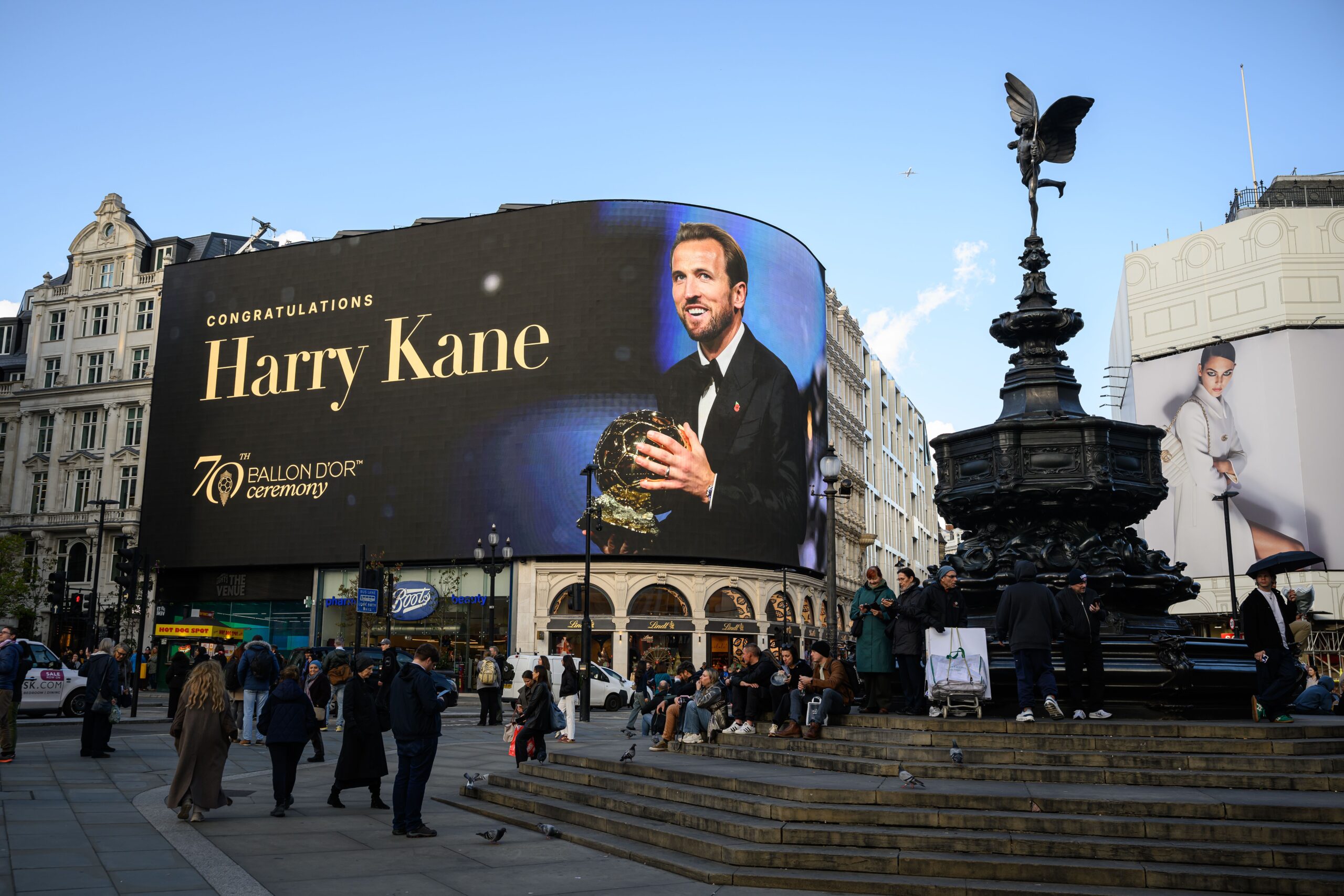

The 2026 Ballon d’Or has officially gone to Harry Kane. Bayern Munich’s record-breaking striker had to beat out tough competition from Lamine Yamal, Kylian Mbappé, and even Lionel Messi, but his unbelievable numbers did all the heavy lifting. With 73 goals in 65 appearances, a World Cup bronze medal, the Bundesliga, DFB-Pokal, and German Super Cup trophies as appetizers, Harry Kane had what critics widely regarded as one of the most dominant cases for a Ballon d’Or in history. Despite not winning the World Cup, Kane lifted the coveted prize on the sheer strength of his numbers alone. It begs the question: do World Cup campaigns actually make a difference or not?
Ballon D’Or: Does a World Cup Year Influence Who Wins It?
Every four years, the argument returns. The Ballon d’Or is supposed to be an individual award given to an individual for their personal accolades, not necessarily team achievements and trophies. Especially the FIFA World Cup.
The World Cup is the pinnacle of our sport, but a Ballon d’Or should reward a player throughout the season, not just six or seven games across a month. Throughout this century, there have been seasons with varying outcomes when it comes to the Ballon d’Or in World Cup years. Let’s take a look at them.
The 2002 and 2006 Ballon d’Or
Ronaldo Nazario lifted the Ballon d’Or the year the first World Cup of this century was held. El Fenomeno, who won his second World Cup title that summer, had already won the Ballon d’Or five years prior, becoming the first Brazilian to do so. However, his second Ballon d’Or in 2002 was heavily influenced by the fact that Brazil won the World Cup and by his performance in the tournament.
| 2002 – Position | Name (Club, Country) | Points |
|---|---|---|
| 1st | Ronaldo (Real Madrid, Brazil) | 169 |
| 2nd | Roberto Carlos (Real Madrid, Brazil) | 145 |
| 3rd | Oliver Kahn (Bayern Munich, Germany) | 110 |
His club record that year was ordinary: Inter lost the Serie A title that year, and he had only scored seven goals in 16 games in an injury-ridden season. However, he scored eight goals in Japan and South Korea and won the Golden Boot as he led Brazil to their fifth World Cup title, including scoring both goals in the final against Germany.
Four years later, Italy won the World Cup in Germany in 2006. The Ballon d’Or was won by the captain of the team, defender Fabio Cannavaro. He led Italy to glory from the back and conceded only two goals in the entire tournament. At club level, his team Juventus was engulfed in the Calciopoli scandal, and he departed for Real Madrid over that controversial summer. To this day, he is the last defender to win the Ballon d’Or, and much of the credit for his victory came from his spectacular World Cup campaign.
| 2006 – Position | Name (Club, Country) | Points |
|---|---|---|
| 1st | Fabio Cannavaro (Real Madrid, Italy) | 173 |
| 2nd | Gianluigi Buffon (Juventus, Italy) | 124 |
| 3rd | Thierry Henry (Arsenal, France) | 121 |
The 2010 and 2014 Ballon d’Or
Once the Messi and Ronaldo era came into play, all logic and discussions about World Cup discourse went out the window.
In 2010, Lionel Messi had a disastrous World Cup. Zero goals and a humiliating 4-0 quarterfinal exit against Germany. And yet, owing to his individual performances for his club that calendar year, he lifted the Ballon d’Or, with his World Cup-winning Barcelona teammates Xavi and Andres Iniesta finishing on the podium behind him. Messi had conjured up 58 goals and 16 assists in just 54 games for Barcelona that year, putting him on the top step despite not winning the grand prize with Argentina. Wesley Sneijder, who won the treble with Inter and was a finalist at the 2010 FIFA World Cup with the Netherlands, only finished fourth.
| 2010 – Position | Name (Club, Country) | Point % |
|---|---|---|
| 1st | Lionel Messi (Barcelona, Argentina) | 22.65% |
| 2nd | Andrés Iniesta (Barcelona, Spain) | 17.36% |
| 3rd | Xavi (Barcelona, Spain) | 16.48% |
The 2014 Ballon D’Or Was Even Stranger
Four years later, in a World Cup where Lionel Messi won the Golden Ball and led Argentina to a runner-up finish, he lost the Ballon d’Or to Cristiano Ronaldo. Ronaldo’s Portugal had gone out disappointingly in the group stages, and he had only scored one goal in the tournament.
In this scenario, the World Cup played virtually no role in the outcome, as most of Ronaldo’s credit for the Ballon d’Or came from his Champions League victory over Atlético Madrid and his tally of 56 goals and 19 assists in 51 games for Real Madrid in 2014. In comparison, Messi had won La Liga, earned a silver medal at the World Cup, and recorded 58 goals and 21 assists in 66 appearances for club and country, but he only finished second. Germany, who won the World Cup, had Manuel Neuer representing them in only third place in the Ballon d’Or rankings that year.
| 2014 – Position | Name (Club, Country) | Point % |
|---|---|---|
| 1st | Cristiano Ronaldo (Real Madrid, Portugal) | 37.66% |
| 2nd | Lionel Messi (Barcelona, Argentina) | 15.76% |
| 3rd | Manuel Neuer (Bayern Munich, Germany) | 15.72% |
The 2018 Ballon d’Or Anomaly
Luka Modrić’s Ballon d’Or win was a weird one, but yet another example of the 2002 and 2006 pattern, when the World Cup carried extra weight. Modrić had just won his fourth Champions League title a month before the World Cup, and at the tournament, he won the Golden Ball while leading Croatia to a World Cup final defeat against France. Strangely, the top two finishers in that season’s Ballon d’Or were Real Madrid’s Luka Modrić and Cristiano Ronaldo. Ronaldo continued his run of disappointing World Cups but finished ahead of World Cup winner Antoine Griezmann, who sat third. That was the first time in many years a player not named Messi or Ronaldo won the Ballon d’Or, and while Modrić’s triumph makes sense, it makes you wonder why Raphaël Varane, who also won the Champions League with Real Madrid AND the World Cup with France, only finished seventh.
| 2018 – Position | Name (Club, Country) | Points |
|---|---|---|
| 1st | Luka Modrić (Real Madrid, Croatia) | 753 |
| 2nd | Cristiano Ronaldo (Juventus, Portugal) | 476 |
| 3rd | Antoine Griezmann (Atlético Madrid, France) | 414 |
The Changes from 2022 Onwards
After 2021, the award moved from being judged on a calendar year to being judged on the previous European soccer season. It meant that the 2022 Ballon d’Or was awarded based on the 2021/22 season and not the calendar year of 2022. Since the World Cup in Qatar that year was held after the 2022 Ballon d’Or ceremony, performances on the grand stage were not yet eligible for that year’s award. Karim Benzema won it in 2022, and after Messi’s triumphant World Cup-winning campaign, he promptly received his record-extending eighth Ballon d’Or in 2023, a victory heavily influenced by his World Cup performances.
The 2026 Ballon d’Or
This year’s window ran from August 2025 to July 2026, which meant that the World Cup fell within it. Spain’s victory over Argentina put Lamine Yamal and Rodri in the conversation, while Messi, at 39, reached another final. Both Harry Kane and Kylian Mbappé scored a bunch of goals in the World Cup, finishing third and fourth with their countries, respectively.
Ultimately, Harry Kane had the best of everything. He had the numbers, the trophies and a great World Cup campaign. Even without lifting the biggest international trophy, Kane showed that an extraordinary individual season across club and country can outweigh the advantage of winning the World Cup.
| 2026 – Position | Name (Club, Country) | Points |
|---|---|---|
| 1st | Harry Kane (Bayern Munich, England) | NR |
| 2nd | Kylian Mbappé (Real Madrid, France) | NR |
| 3rd | Lamine Yamal (Barcelona, Spain) | NR |
The Verdict
- A World Cup win or a deep run in the tournament definitely boosts your chances, but it is explicitly not required if you are a demigod, as 2010 and 2014 show.
- Whoever wins the Golden Ball at the World Cup doesn’t usually win the Ballon d’Or. Oliver Kahn, Zinedine Zidane, Diego Forlan, Messi in 2014, and Rodri in 2026 all won the Golden Ball but didn’t win the Ballon d’Or those years. Only Modrić in 2018 and Messi in 2022 are the outliers.
- If the club season is very open, with a lot of qualified candidates but no clear winner, the World Cup acts as a tiebreaker, as seen in 2002 and 2006.
- Voting bodies play a huge role. When the 2002 and 2006 awards were given, only journalists voted for the Ballon d’Or. From 2007 to 2015, coaches and captains of national teams were also eligible to vote, before the award reverted to a journalists-only vote in 2016.
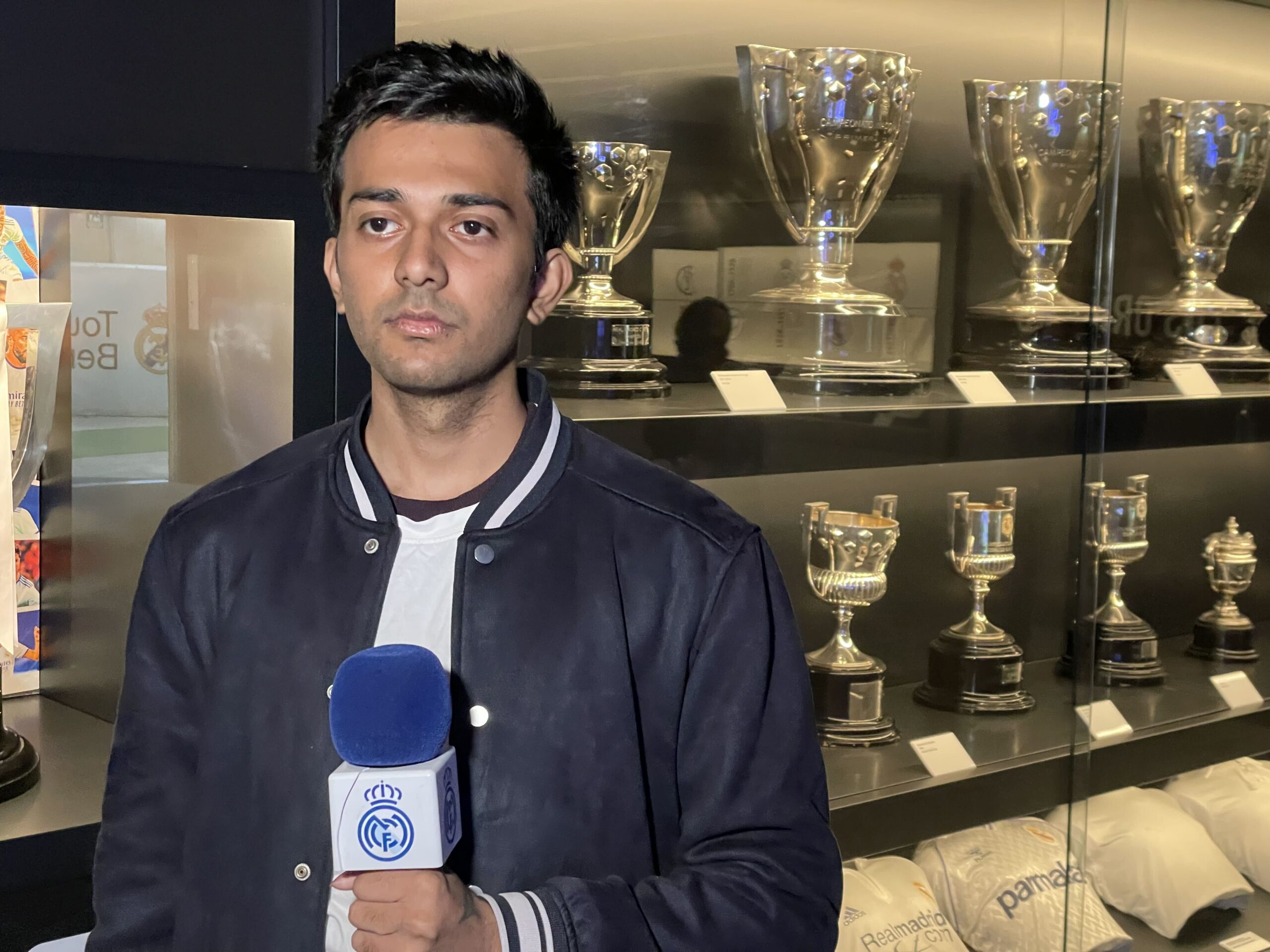
Abhik Deb is an accomplished sports journalist and content creator, renowned for his innovative approach to digital storytelling within the football world. With a Master’s degree in Sports Journalism and Communications from Universidad Europea de Madrid, Abhik brings a sophisticated understanding of both traditional journalistic tenets and contemporary digital media strategies to his work. His professional journey includes a significant tenure as a multimedia journalist at Real Madrid C.F., where his contributions spanned video editing, scriptwriting, and on-camera presenting. Notably, Abhik made history as the first Indian to record a live stand-up from the hallowed Santiago Bernabéu pitch for Real Madrid TV, underscoring his pioneering spirit and influential presence. A specialist in La Liga and Spanish football, Abhik excels at captivating audiences through viral football content and insightful documentary-style videos. His natural ability to blend rigorous journalism with creative digital storytelling is evident in his independent fan channel, ‘LaLigaVic,’ where he cultivates a growing audience through engaging, original coverage of Spanish football culture. Abhik’s proficiency extends to social media strategy and audience engagement, crucial skills in today’s digital landscape. You can explore more of Abhik’s work on Hooligan Soccer and Muckrack. Connect with Abhik on Instagram, LinkedIn, and YouTube to follow his continuous dedication to delivering high-quality, authoritative sports content.