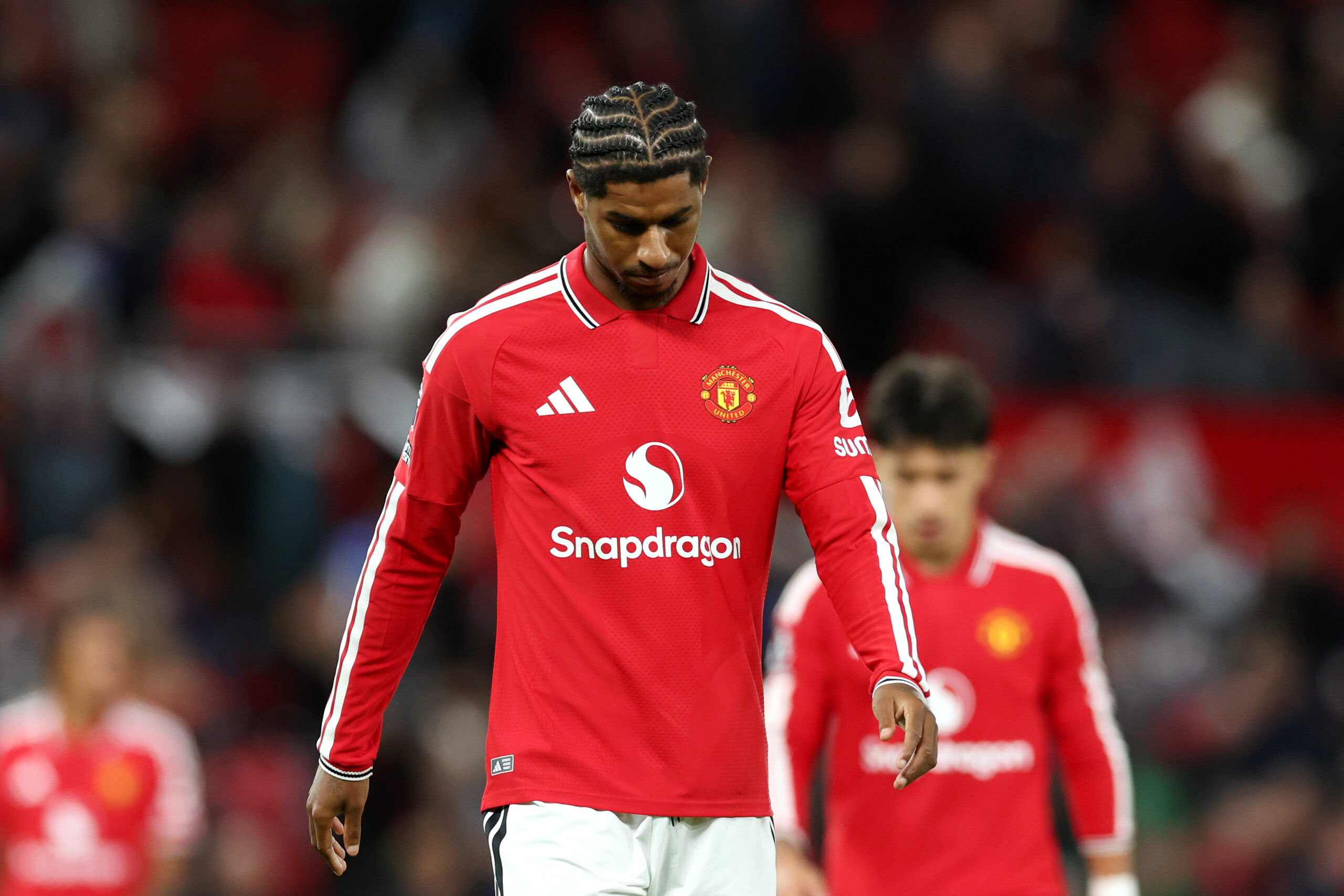

After five consecutive clean sheets in all competitions, Brighton & Hove Albion’s defensive resistance finally crumbled on Sunday. Yasin Ayari squandered a golden opportunity to put the visitors ahead at Anfield, and Liverpool made them pay, with a Pascal Groß own goal and an Alexander Isak strike in the space of four minutes sealing a 2-0 victory.
Brighton will now look to bounce back with consecutive trips to the Etihad Stadium, facing Manchester City in the EFL Cup and Premier League. These encounters will provide the harshest examination yet of the Seagulls’ title credentials, testing whether their extraordinary early-season form is sustainable or merely a purple patch.
For a club that narrowly avoided liquidation, spent 14 years without a permanent home and only returned to the top flight in 2017 after a 34-year absence, the prospect of challenging for the Premier League title would once have seemed unthinkable. Yet Brighton have continued to defy expectations.
Brighton Flying Against the Wind
Graham Potter established them as a top-half Premier League side, Roberto De Zerbi guided them to European qualification for the first time, and Fabian Hürzeler has taken them another step forward. After consecutive eighth-place finishes under Hürzeler, Brighton now sit third in the Premier League, five points behind Manchester City and Arsenal, one ahead of Liverpool and three clear of Chelsea.
They’re threatening to produce the greatest season in their 125-year history, but can they sustain their momentum while juggling domestic and European commitments?
Despite losing key players like Carlos Baleba, Jan Paul van Hecke and Danny Welbeck to summer trades, Brighton have enjoyed a sensational start. They opened their league campaign with a 4-0 demolition of Aston Villa before defeating Tromsø 4-0 on aggregate to qualify for the UEFA Conference League.
Defeat at Chelsea and a draw against Leeds threatened to derail their momentum, but Brighton responded with six consecutive victories in all competitions before suffering their second league defeat at Liverpool.
Relentless Press Leads to Success…
Perhaps the biggest reason to believe their early-season success is no fluke is their relentless pressing. Brighton lead the Premier League for high turnovers, pressing sequences and attacking-third regains, while their PPDA of 8.6 is the lowest in the division.
That intensity has proven effective even against the country’s strongest sides. In September’s 3-0 demolition of reigning champions Arsenal, Brighton forced 15 high turnovers and regained possession nine times in the attacking third, the most any team had managed against the Gunners in nearly three years.
“They remind me a little bit of watching a Jürgen Klopp Liverpool team; really aggressive, really fast, really direct,” stated former Liverpool defender Jamie Carragher. “I think the style of football Brighton play now is better [than what they played under De Zerbi] or certainly something I’d want to watch more. The best way to describe the football is aggressive, forward, vertical, intensity.”
This transformation didn’t happen overnight. Brighton led the Premier League with 192 high turnovers last season, and Hürzeler has continued refining a system designed to asphyxiate opponents and recover possession in dangerous areas.
Their attacking sequences begin an average of 47.4 meters from their own goal, the highest starting position in the league, while Brighton also employ the division’s third-highest defensive line.
By compressing the space between their attackers and defenders, they can restrict opponents’ passing options, win the ball back quickly and launch attacks before opposing defences have time to reorganise. However, the very intensity that makes Brighton so difficult to play against could eventually become their undoing.
… But Can Be Difficult to Maintain
Maintaining such an aggressive pressing system across 38 league matches is demanding enough, let alone while competing on multiple fronts. Last week’s goalless draw at Czech side FK Jablonec raised further questions about whether Brighton possess the squad depth to balance their European commitments with a potential title challenge.
Chelsea demonstrated in 2024/25 that competing in the Conference League need not derail a club’s domestic ambitions. Enzo Maresca effectively operated with two different starting XIs, making an average of 8.5 changes per European fixture as the Blues secured Champions League qualification and lifted the Conference League trophy.
Brighton, however, cannot rely on the same financial resources or squad depth. Injuries, fatigue and fixture congestion could force Hürzeler to compromise on the intensity that has made his side so effective, potentially giving opponents more opportunities to exploit the space behind their high defensive line.
There are also questions about whether Brighton can maintain their extraordinary attacking output.
Brighton’s Explosive Attack…
The Seagulls lead the Premier League with 31 big chances created, while ranking second for shots per match and expected goals. They have scored a league-high 23 goals despite not having a single player with more than three to his name, with 11 different players finding the net across their opening eight league matches.
This distribution of goals is encouraging. Rather than depending on one prolific striker, Brighton have developed a system in which goalscoring opportunities are shared throughout the team. Their attacking threat comes from multiple positions, making it harder for opponents to neutralize them by marking one or two individuals.
Nevertheless, their finishing efficiency raises questions about sustainability. Brighton have significantly outperformed their expected goals this season, suggesting that their remarkable conversion rate may be difficult to maintain.
…Tough to Sustain
While world-class finishers like Lionel Messi and Son Heung-min have repeatedly exceeded their xG over several seasons, sustaining that level of overperformance across an entire team is an entirely different proposition. Even if Brighton continue creating chances at the same rate, a regression towards their expected goals could turn victories into draws and draws into defeats.
Sunday’s loss at Liverpool offered a timely reminder. Brighton enjoyed 64% possession, registered 17 shots and generated more expected goals than their opponents, yet managed just one attempt on target. They weren’t necessarily outplayed, but they were punished for their inability to make their opportunities count.
History also provides a cautionary tale. Before Brighton’s 23-goal haul across seven matches, only three Premier League teams had scored more in their opening seven games: Arsenal in 2009/10 and Manchester United in 2011/12, with 24 apiece, and Manchester City in 2019/20, with 27. None went on to win the title.
Set-Piece Success…
Another factor behind Brighton’s remarkable start has been their growing threat from set-pieces. Having scored six goals from corners in Hürzeler’s debut campaign and nine last season, the Seagulls have already scored six goals from corners this term.
Pascal Groß has been instrumental, with his pinpoint deliveries finding the heads of summer arrivals Chema Andrés and Luka Vušković. Brighton’s newfound aerial threat has added another dimension to an attack already capable of dismantling opponents through intricate passing combinations and relentless pressing.
Their underlying set-piece chance creation ranks among the best in the division, suggesting that this improvement is more than a temporary purple patch. However, their defensive record from dead-ball situations tells a different story.
…Meets Defensive Vulnerability
Brighton have conceded four goals from set pieces, while their underlying defensive set-piece numbers rank among the worst in the Premier League. Against opponents like Arsenal, whose ability to exploit corners and free kicks has become a major attacking weapon, such vulnerabilities could prove particularly costly.
What’s arguably the most concerning, however, is the disparity between Brighton’s defensive results and underlying performances. Before their trip to Anfield, they had conceded 5.16 fewer goals than their expected goals against, the largest positive differential in the Premier League.
Their five consecutive clean sheets were undoubtedly impressive, but they also had to thank their opponents for failing to convert their chances. Just as Brighton’s attacking output has been boosted by exceptional finishing, their defensive record has benefited from unusually wasteful opposition.
Margins Will Tighten
Brighton have been scoring more than expected and conceding fewer than expected, an advantageous combination that could become increasingly difficult to sustain over a full campaign.
Liverpool demonstrated how quickly those margins can shift. Brighton created enough opportunities to make the contest competitive, but their failure to convert them, coupled with two costly defensive moments, ultimately proved decisive.
For all their impressive performances, the Seagulls have yet to demonstrate that they can consistently turn territorial dominance and chance creation into victories when the margins turn against them.
A Question of Experience
There is also the question of experience. Brighton have never won a major trophy in their history, and while several members of their squad have enjoyed silverware elsewhere, none have experienced the relentless pressure of competing for a championship in Europe’s strongest leagues.
That doesn’t mean they’re incapable of mounting a title challenge. Their pressing, attacking variety and tactical organization have already shown they can compete with the Premier League’s elite. But sustaining that level across an entire season, particularly when results become harder to come by, presents an altogether different challenge.
The coming weeks should offer some answers. Brighton have avoided defeat in their last four meetings with Manchester City, winning twice, but have never beaten them at the Etihad Stadium. Two trips to Manchester, combined with their continuing European commitments, will test their tactical discipline, physical endurance and ability to deliver against elite opposition.
Brighton have already demonstrated that they possess many of the qualities associated with a title contender. The question is whether they can maintain those qualities when the goals become harder to score, the clean sheets harder to preserve, and the fixtures begin to pile up.
They have shown they can play like champions. Now they must prove they can win like them.