
What used to go relatively unnoticed on a football pitch can now cost a player a red card and several matches on the sidelines. Hair pulling has become one of the sport’s most controversial disciplinary issues, with recent cases involving Vinícius Júnior, Spain women’s international Athenea del Castillo, and even two players sent off in the same CONCACAF Nations League match for pulling the hair of the same opponent.
Grabbing an opponent by the hair is nothing new in football, but the consequences have become impossible to ignore. The debate is no longer just about whether contact occurred. It is also about intent, the severity of the action, and whether the punishment fits the offense.
Vinícius Júnior and the Red Card That Sparked Controversy
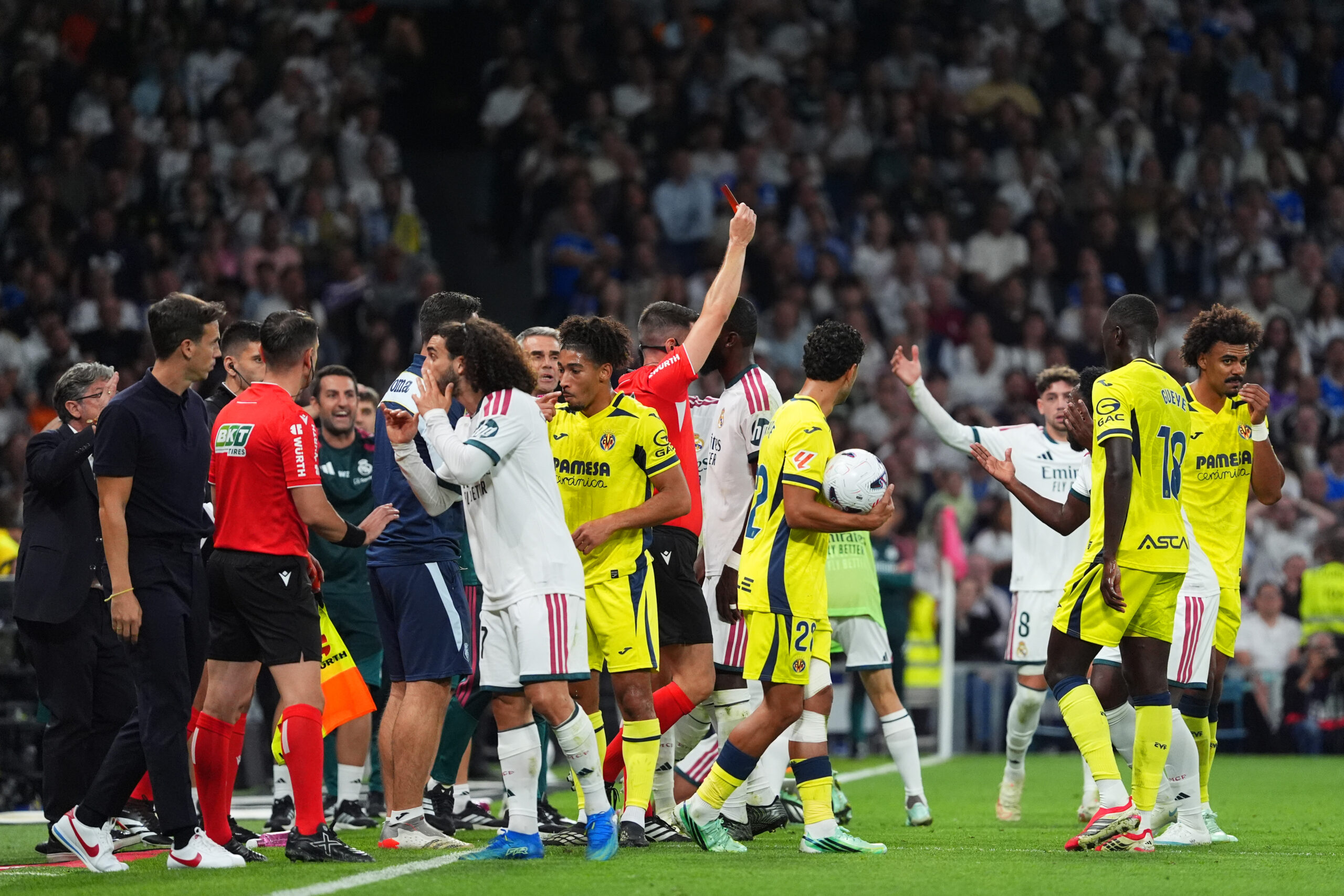
One of the latest cases involves Vinícius Júnior, the Real Madrid forward who found himself at the center of a heated debate after grabbing Nathan Saliba by the hair during a match against Villarreal.
The incident quickly divided fans and pundits. Some argued that this type of contact must be punished firmly, while others questioned whether every hair-pulling incident deserves the same treatment, particularly when there is disagreement over exactly what happened.
The disciplinary consequences added another layer to the controversy. Vinícius reportedly received a four-match suspension, with two matches attributed to the incident and the remaining two linked to his subsequent protests. The punishment would also rule him out of El Clásico against Barcelona.
The incident raised a familiar question: should a deliberate act of aggression receive the same punishment as contact that may have been accidental?
Athenea del Castillo Sent Off Against the United States
The controversy is not limited to the men’s game. During a match between the United States and Spain women’s national teams, Real Madrid forward Athenea del Castillo, who wears Spain’s No. 10 shirt, was also shown a red card for pulling the hair of Michelle Cooper.
Athenea had been on the pitch for just seconds when the incident occurred. Mexican referee Diana Pérez showed the Spanish international a straight red card for the action.
The decision prompted a reaction from her teammates. Patri Guijarro publicly backed Athenea, saying she was convinced the incident had not been intentional or malicious. Eva Navarro also expressed sympathy for her teammate’s frustration, although she admitted she had not yet seen the footage herself.
The incident highlighted one of the biggest challenges surrounding these decisions: distinguishing a deliberate act of aggression from accidental contact during a match.
Two Players Sent Off for Pulling the Same Opponent’s Hair
One of the most bizarre incidents took place during Antigua and Barbuda’s 5-0 victory over Anguilla in the CONCACAF Nations League.
The unlikely protagonist was Anguilla player Aedan Scipio, whose exceptionally long dreadlocks reportedly measure more than five feet. Scipio came on in the 68th minute, with the result already beyond doubt, but his appearance led to two extraordinary disciplinary incidents.
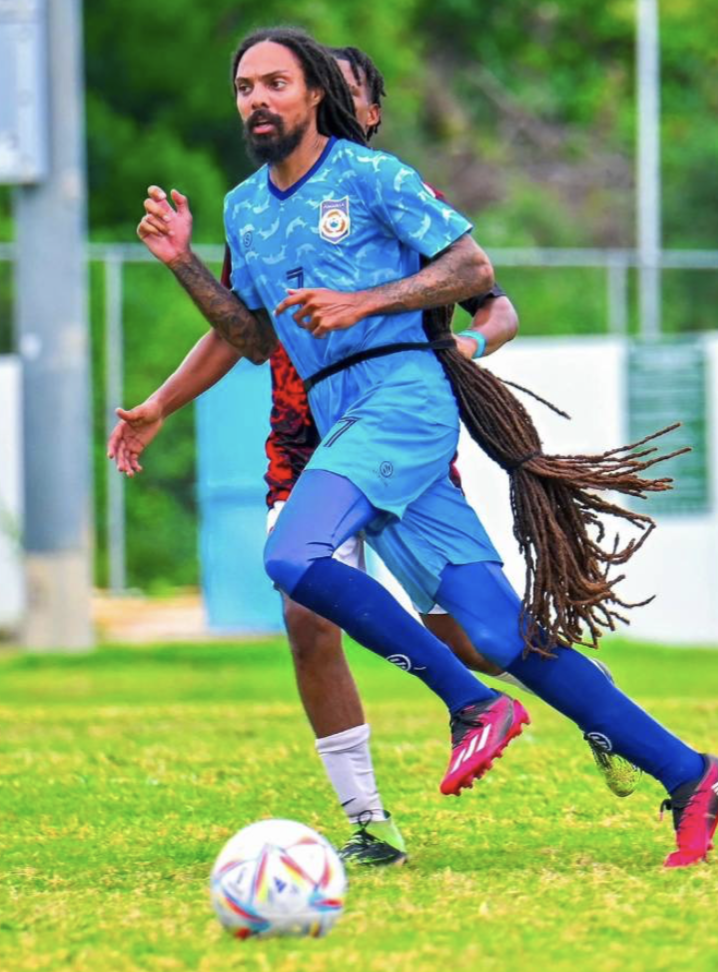
First, Keon Greene was sent off in the 72nd minute after pulling Scipio’s hair. Then, deep into stoppage time, S. Knight did the same thing and was also shown a red card.
Two players from the same team were therefore dismissed for pulling the hair of the same opponent in a match that had already been decided on the scoreboard.
It was a bizarre sequence, but it also illustrated a serious point: an action that some fans might dismiss as minor can carry major consequences when the referee considers it violent conduct.
Marc Cucurella & Tolu Arokodare Know This Feeling
Marc Cucurella and Tolu Arokodare are players who have experienced hair-pulling incidents firsthand.
In 2024, the Spanish full-back was grabbed by the hair by Jack Stephens, then playing for Southampton. Stephens received a four-match suspension: three for the incident, plus one more as it was his second red card of the season.
In 2026, Wolverhampton forward Tolu Arokodare had his hair pulled twice, by Everton’s Michael Keene and Sunderland’s Dan Ballard. Both players received three-match suspensions.
The punishment precedent once again became relevant again following the controversy surrounding Vinícius. Cucurella argued that the rules must be applied consistently and made his position clear with a pointed remark: “I hope that if they touch a hair on my head, you give them a red card. You go to VAR.”
His comments brought the central issue into focus. If pulling an opponent’s hair is considered violent conduct, the same disciplinary standards should apply regardless of who is involved.
What Do the Rules Actually Say About Hair Pulling?
The International Football Association Board’s Laws of the Game allow referees to send off a player for violent conduct when they use excessive force or brutality against an opponent, teammate, match official or another person, provided the action does not constitute a challenge for the ball.
A deliberate hair pull can therefore be classified as violent conduct and punished with a red card, even if it does not cause a visible injury. The referee must assess the circumstances of the incident and determine the appropriate disciplinary action.
VAR can also intervene in potential straight-red-card situations, subject to the protocol used in the competition.
That means the debate is not simply about whether a player grabbed someone’s hair. The key questions are whether the action constitutes violent conduct, whether the contact was accidental, and whether the punishment reflects the seriousness of what happened.
The cases involving Vinícius Júnior, Athenea del Castillo, Aedan Scipio and Marc Cucurella show that hair pulling is no longer just an unusual footnote in football. It has become a disciplinary issue capable of changing a match, leaving a team with ten players and triggering suspensions that extend well beyond the final whistle.
The question that remains is whether football is applying a consistent standard to these incidents — or whether every new case will spark another controversy.

Alejandro Orellana is an accomplished sports journalist based in Mexico City, known for his incisive coverage of Club América and the Mexican National Team. A graduate of Journalism from Escuela de Periodismo Carlos Septien García, Alejandro brings a deep understanding of sports media to his work. His expertise extends to SEO and content creation, allowing him to produce engaging and discoverable sports narratives. He has contributed as a freelance writer for Goal.com, where he notably conducted interviews with MLS players, further showcasing his comprehensive interviewing skills. Prior to this, Alejandro dedicated five years to ESPN’s production department, contributing to renowned shows including SportsCenter, Futbol Picante, and NFL Live. His insightful articles can be found on platforms such as Deportrece and Hooligan Soccer. Connect with Alejandro on @soyalexorellana and Tik Tok to stay updated with his latest work. His commitment to journalistic integrity ensures every piece offers valuable and trustworthy insights for sports enthusiasts.