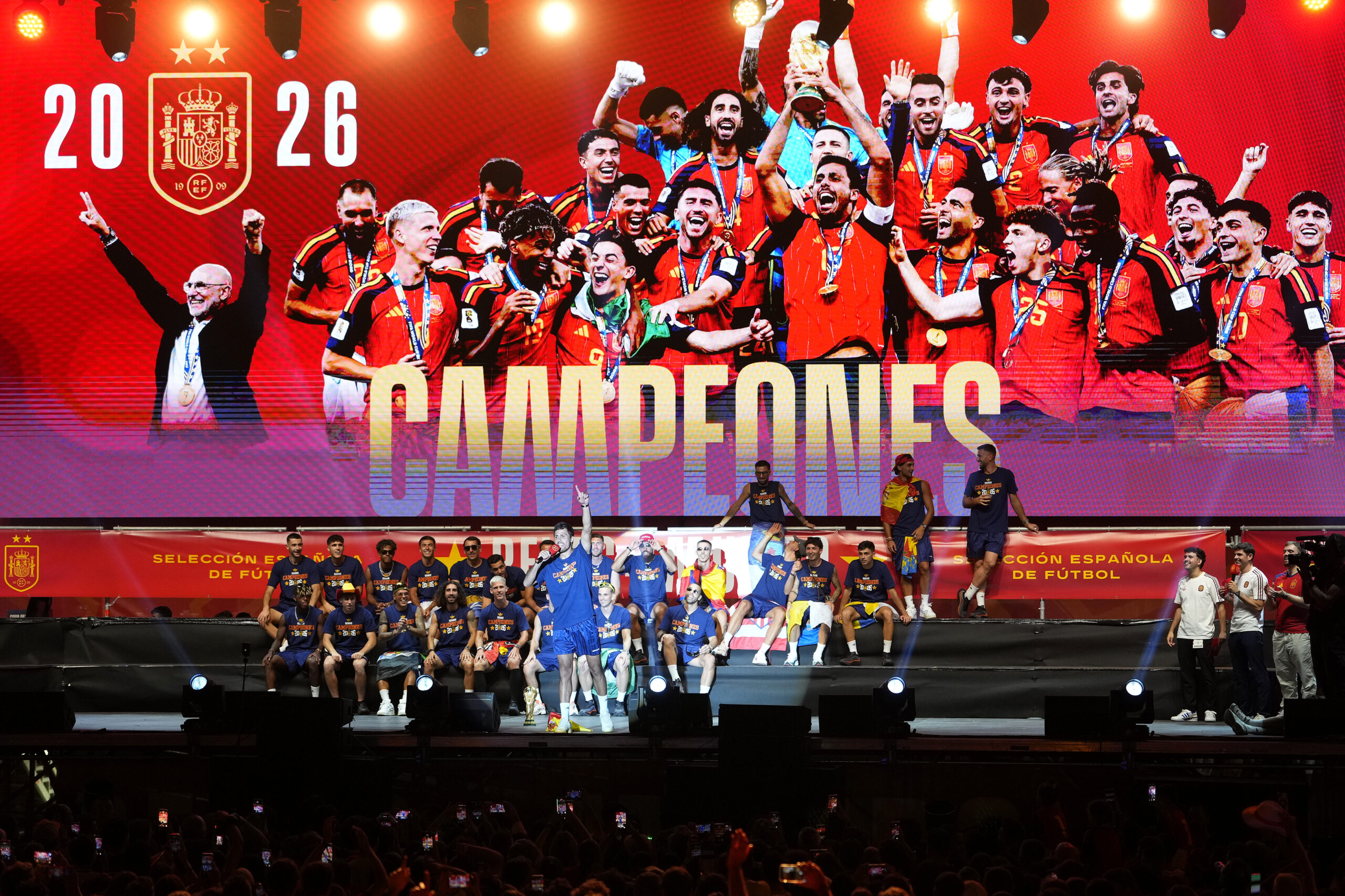

After 16 long years, Spain won the 2026 FIFA World Cup in spectacular fashion. Ferran Torres’ extra-time winner against Argentina in the final completed an extraordinary cycle under Luis de la Fuente, after years and years of hardwork and adjustments.
Unlike many World Cup winners that peak during a single tournament, Spain arrived in North America on an over 30-game unbeaten streak as reigning European champions. They already possessed their own identity, a coherent squad, and a soccer system that had been refined over several years. Luis de la Fuente had, in a way, been working toward this triumph for over 13 years, and here is how it all happened.
Luis de la Fuente Built on Spain’s Foundations
When Luis de la Fuente replaced Luis Enrique as Spain manager in December 2022, the appointment was not well received. Just who was this 61-year-old guy who had never managed a major club before? How could you hand the reins of one of the best teams in Europe to a relative unknown?
But the Royal Spanish Football Federation (RFEF) saw something different in him.
Having coached Spain’s youth teams for over a decade, De la Fuente already knew many of the players who would later become the core of the senior squad. He guided Spain to the UEFA Under-19 European Championship, the UEFA Under-21 European Championship, and an Olympic silver medal, playing an important role in forging the pathway from the youth teams to the senior national team.
Instead of introducing an entirely new philosophy, De la Fuente expanded upon ideas the players had already learned throughout their development. The foundations of tiki-taka were already there, and the players already knew his methods. The result was a national team that looked unusually cohesive due to the ideas already ingrained in them despite the limited preparation time available in international soccer.
Spain Modernized Their Identity Without Abandoning It
For years, critics asked Spain to abandon their slow-moving, sterile version of tiki-taka and adapt to the modern game. But Luis de la Fuente was adamant from the start that he was here to evolve the system, not reject it entirely.
Possession remained central to Spain’s game, but it was no longer about dominating the ball simply for the sake of it. Every passing sequence was now faster. Spain looked to form triangles to progress up the pitch and attack spaces before defensive lines could recover.
The team also became far more aggressive without possession. High pressing, swarming opponents after losing the ball akin to gegenpressing, and rapid defensive recoveries became defining characteristics of De la Fuente’s side.
Rodri and the Midfield Were Why Spain Won the 2026 FIFA World Cup
Rodri was the heartbeat of Spain’s World Cup-winning team.
The Manchester City midfielder dictated the tempo of almost every match, knowing when to slow the game and when to accelerate attacks. His positioning also allowed Spain to escape pressure, making him the foundation of their buildup play.
Ahead of him, Pedri or Fabián Ruiz provided creativity between the lines. Their movement constantly disrupted defensive structures and helped create space for teammates while linking midfield and attack.
Dani Olmo completed the trio by offering intelligent positioning, and late runs into attacking areas. Together, the three midfielders gave Spain complete control over most matches throughout the tournament.
What Else Did Spain Change?
Spain’s greatest improvement came in wide areas.
Lamine Yamal entered the tournament as one of the world’s brightest young stars, and opponents regularly committed multiple defenders to stopping him. That attention created space elsewhere, allowing Spain’s midfielders and fullbacks to exploit gaps across the pitch.
On the opposite flank, Nico Williams usually stretched defenses with his pace. However, due to his injury, Álex Baena stepped into his role and provided a more conservative way of attacking down the wing, something Spain’s opponents probably hadn’t anticipated before the start of the tournament.
Mikel Oyarzabal’s movement as a false nine added another element of surprise. Instead of remaining inside the penalty area, he frequently dropped into midfield, dragging defenders out of position and creating room for runners beyond him.
Pedro Porro and Marc Cucurella also played crucial roles by providing width as fullbacks while maintaining Spain’s balance in attack and defence.
Spain Passed Every Tactical Test at the World Cup
The tournament presented Spain with a different challenge in every round.
Cape Verde frustrated them with a disciplined defensive performance in the group stage, resulting in a goalless draw. La Roja learned from their mistakes, reshuffled the attack, and responded with convincing victories over Saudi Arabia and Uruguay to finish top of the group.
Austria’s aggressive pressing in the Round of 16 tested Spain’s ability to play under pressure, but De la Fuente’s side comfortably won 3-0 by exploiting the spaces left behind the Austrian press.
Portugal defended much deeper in the quarterfinals, forcing Spain to remain patient. A late goal from Mikel Merino secured a narrow 1-0 victory and reinforced the importance of the squad’s depth.
Belgium’s willingness to attack created a more open quarterfinal, but Spain balanced possession with disciplined defending to win 2-1 and reach the semifinal against France.
Then they forced France to build out wide, where Spain’s wingers relentlessly tracked back to create defensive superiority and trap the French attackers. Luis de la Fuente’s side prioritized suffocating the central channels. They packed the midfield tightly together to block passing lanes, effectively disconnecting Michael Olise from France’s forwards. Spain won 2-0 to reach only the second World Cup final in the country’s history.
Argentina provided the toughest challenge of all. The defending world champions had no answer for Spain’s midfield and defense throughout regular time, as De la Fuente’s side never abandoned its principles. Ferran Torres eventually scored the decisive goal in extra time, completing the journey as Spain won the 2026 FIFA World Cup.
And That’s Why Spain Won the 2026 FIFA World Cup
Spain’s victory in 2026 will inevitably invite comparisons with the team that conquered the world 16 years earlier.
The Spain of 2010 transformed the way international soccer viewed possession. The Spain of 2026 demonstrated that the philosophy could still succeed all these years later; it just needs a little tweak now and then.
That tweak was Luis de la Fuente’s greatest achievement. And that evolution was why Spain won the 2026 FIFA World Cup.
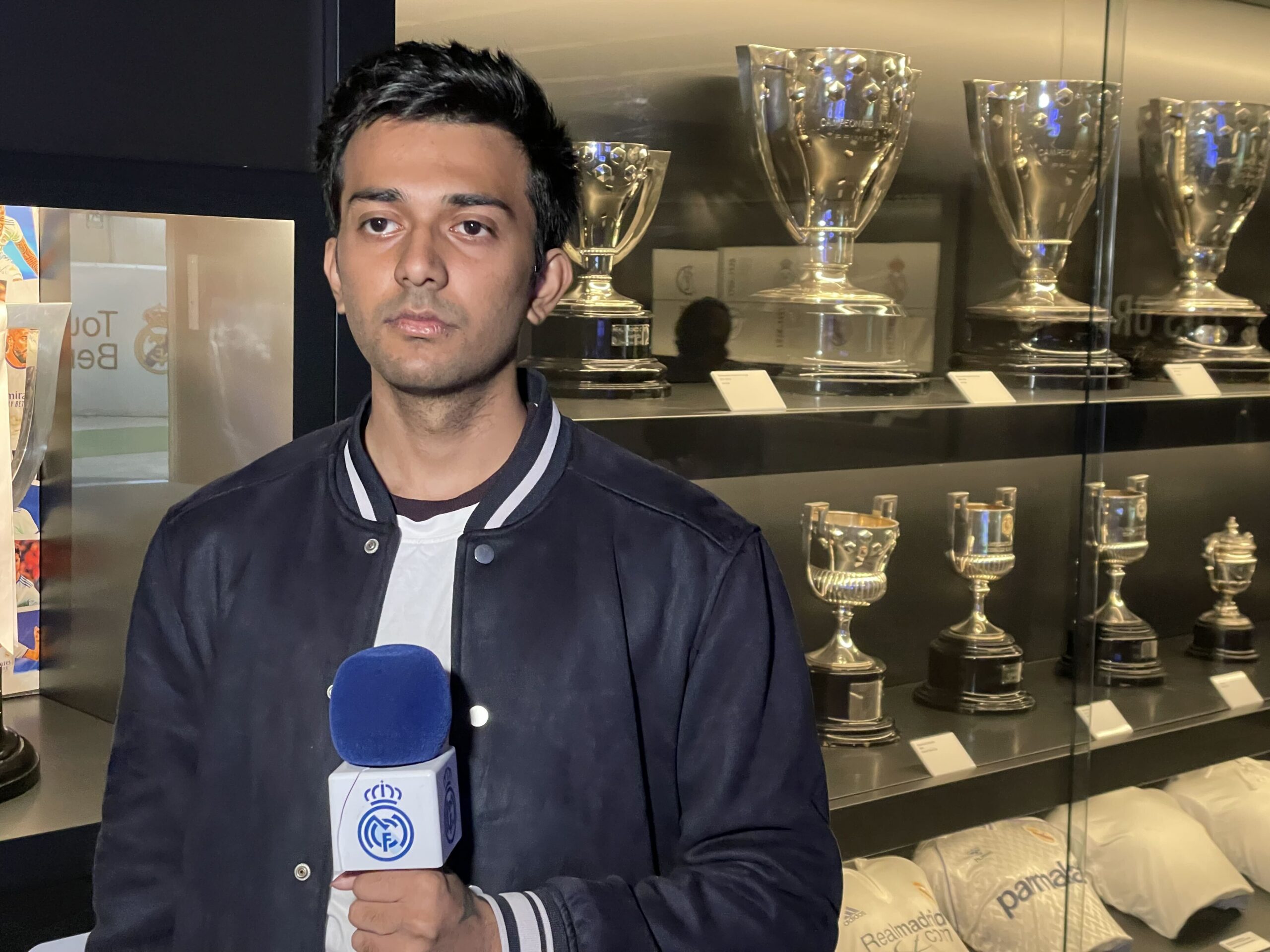
Abhik Deb is an accomplished sports journalist and content creator, renowned for his innovative approach to digital storytelling within the football world. With a Master’s degree in Sports Journalism and Communications from Universidad Europea de Madrid, Abhik brings a sophisticated understanding of both traditional journalistic tenets and contemporary digital media strategies to his work. His professional journey includes a significant tenure as a multimedia journalist at Real Madrid C.F., where his contributions spanned video editing, scriptwriting, and on-camera presenting. Notably, Abhik made history as the first Indian to record a live stand-up from the hallowed Santiago Bernabéu pitch for Real Madrid TV, underscoring his pioneering spirit and influential presence. A specialist in La Liga and Spanish football, Abhik excels at captivating audiences through viral football content and insightful documentary-style videos. His natural ability to blend rigorous journalism with creative digital storytelling is evident in his independent fan channel, ‘LaLigaVic,’ where he cultivates a growing audience through engaging, original coverage of Spanish football culture. Abhik’s proficiency extends to social media strategy and audience engagement, crucial skills in today’s digital landscape. You can explore more of Abhik’s work on Hooligan Soccer and Muckrack. Connect with Abhik on Instagram, LinkedIn, and YouTube to follow his continuous dedication to delivering high-quality, authoritative sports content.