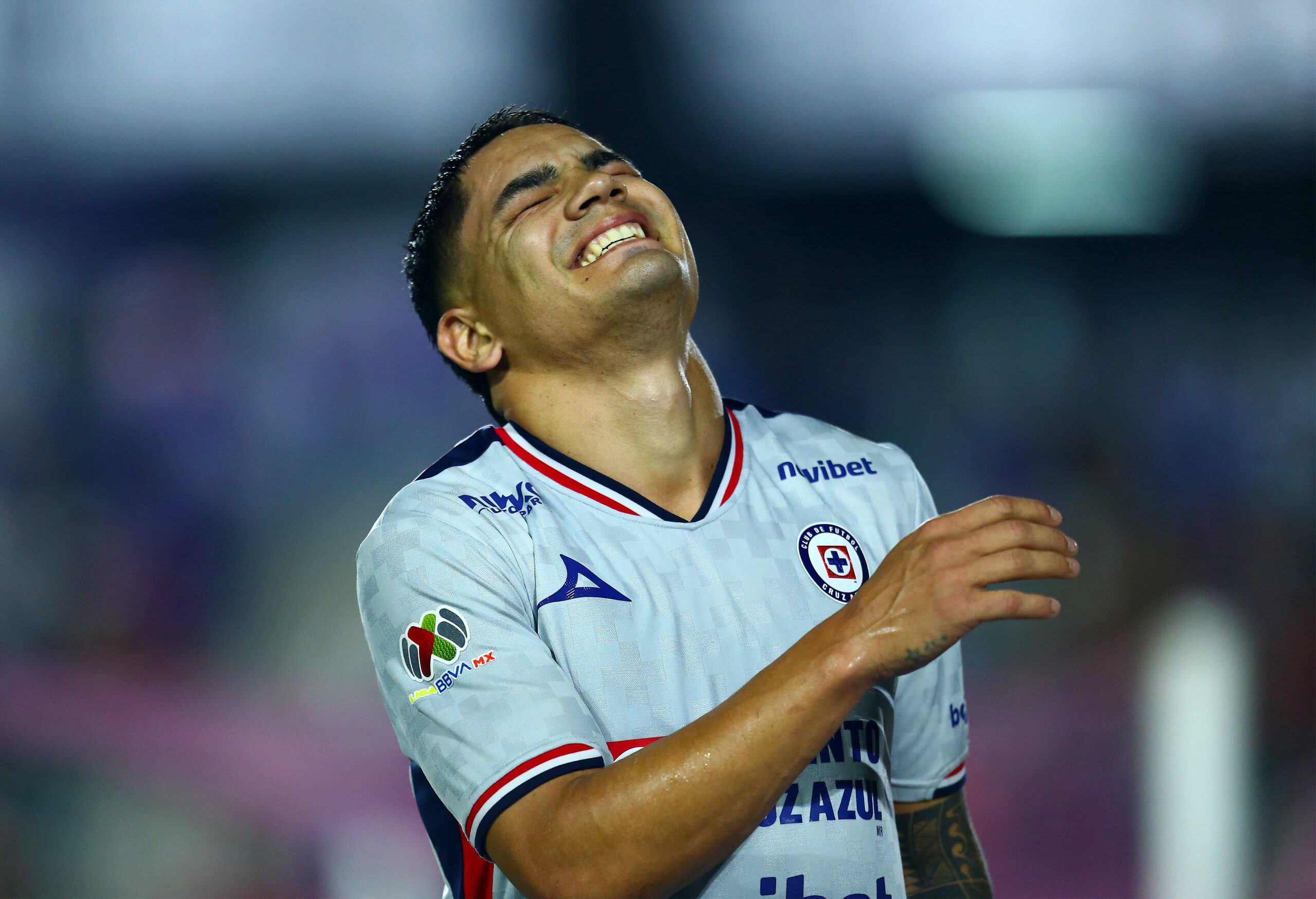

There was a time when Hirving Lozano embodied everything Mexican football wanted to be — explosive, fearless, and unapologetically decisive on the biggest stages. Today, he feels like a fading echo of that player, more memory than reality, like a childhood favorite quietly pushed aside and forgotten.
It sounds dramatic. It also feels accurate.
Lozano’s Prime
At his peak, Lozano was chaos in motion. Quick over the first few meters, ruthless in one-on-ones, capable of scoring or creating out of nothing. More importantly, he had the personality to demand the ball when it mattered. For years, he carried Mexico national team on his back, delivering moments that justified the hype.
None bigger than that goal against Germany national team at the 2018 FIFA World Cup — the kind of play that doesn’t just win games, it builds legacies.
But that version of Lozano feels increasingly distant.
The present is far less cinematic. These days, “Chucky” exists on the margins. No jersey. No matchday routine. He hasn’t played competitive football since November 29, when he came off the bench in a 3–1 playoff loss for San Diego FC against the Vancouver Whitecaps.
From Champions League nights to training alone — it’s not just a decline, it’s a disappearance.
His résumé in Europe suggests a very different story. Lozano built a strong career with PSV Eindhoven and Napoli, winning domestic titles and earning respect across top leagues. He wasn’t just another export — he was one of the success stories.
Which is why the move in 2025 felt less like a step forward and more like a pivot.
The MLS Move
San Diego FC, MLS’s shiny new project, made him the centerpiece. A franchise signing. Four-year deal. Roughly $7.6 million per year. The message was clear: this was going to be his team.
On paper, everyone won. In practice, it unraveled quickly.
The numbers don’t scream failure — 11 goals in 34 matches is respectable, even if not spectacular. But football rarely collapses because of stats alone. Behind the scenes, something broke. Reports pointed to a confrontation with head coach Mikey Varas after Lozano reacted poorly to being substituted.
That moment of frustration turned into a fracture.
He was benched. Then briefly forgiven after a public apology. Then quietly pushed aside again. The team moved on, even reaching a conference final, while its supposed star became increasingly expendable.
What was meant to be a flagship signing became a cautionary tale.
At the same time, Lozano reappeared with the national team under Javier Aguirre, but the spark wasn’t there. The performances raised more doubts than excitement. Then came the final blow: San Diego FC made it official — Lozano would not play for the club anymore.
It was a clean break. No gray areas.
From there, the crossroads was unavoidable. He could take a pay cut, accept a loan, and fight his way back into relevance. Or he could walk away from the remaining three years of his deal, leaving nearly $18 million behind.
He did neither.
Offers reportedly existed — real chances to get minutes, rebuild form, and keep the dream of the 2026 FIFA World Cup alive. Lozano declined them, choosing instead to stay put in San Diego, protected by a contract that guarantees income and comfort, but little else.
And just like that, time started working against him. No transfers. No matches. No rhythm.
Part of a Larger Tale
Then came another layer to the story — one that says as much about perception as it does about reality.
His brother, Bryan Lozano, didn’t hold back in comments to ESPN. According to him, Hirving’s behavior has followed a pattern across clubs.
“At Napoli he had problems with Gattuso and the coaching staff. He had issues at PSV too. He’s rude and arrogant, and that leads nowhere. That’s influenced why many people don’t want him.”
He went further, suggesting that the financial argument is, at best, a convenient excuse.
“Even if he earns a lot in San Diego, I feel like that’s just a pretext. It doesn’t make sense to have someone like that, especially when a healthy locker room is so important. Very few — if any — teams would take that risk, because they know what could happen.”
And then, the most personal detail of all: according to Bryan, the relationship between Lozano and his family has been broken for years.
“He has us blocked. We don’t even have his phone number.”
It’s the kind of detail that shifts the narrative from professional decline to something more complicated — a player increasingly isolated, both on and off the pitch.
Lozano in Limbo
So what remains is a strange image: a footballer in limbo, highly paid yet completely inactive, drifting further from the level that once made him indispensable.
At 30, this isn’t supposed to be the ending. It’s not even supposed to look like the beginning of the end. If anything, it should be the stage where experience meets urgency. Instead, it feels like a pause that’s lasted too long.
Yes, the decision makes sense on a human level. Financial security matters. Stability matters. But football rarely rewards comfort. It rewards momentum, risk, and presence. And right now, Lozano has none of those.
Which brings everything back to one unavoidable consequence: the World Cup.
Because while he trains alone — as if to frame isolation as resilience — the rest of the football world keeps moving. New names emerge. Coaches make decisions based on form, not reputation.
And nostalgia doesn’t get you on a team sheet.
There’s something almost poetic about it: a player once defined by his explosiveness now running drills in solitude, without a club, without a jersey, without a stage — but with a bank account that tells a completely different story.
Full pockets. Empty calendar.
In the end, this isn’t just about a disagreement with a coach or a complicated contract. It’s about priorities. About the moment a player — consciously or not — chooses comfort over competition.
And in Lozano’s case, that choice might cost him the one stage where he once felt untouchable.