The list of island nations who have qualified for the World Cup is a tiny one. Iceland, Japan and Australia (debatable, as they are widely considered a continent) were the previous three. But today they get to add Cape Verde to their illustrious company.
A small archipelago nation with nine inhabited islands off the western coast of Africa, Cape Verde is a former Portuguese colony with a population of just under 600,000 people. This makes them the second smallest nation (in population) to qualify. In fact, there are more Cape Verdeans living abroad than in the country itself, many of those in New England, USA and Portugal.
Soccer Struggles
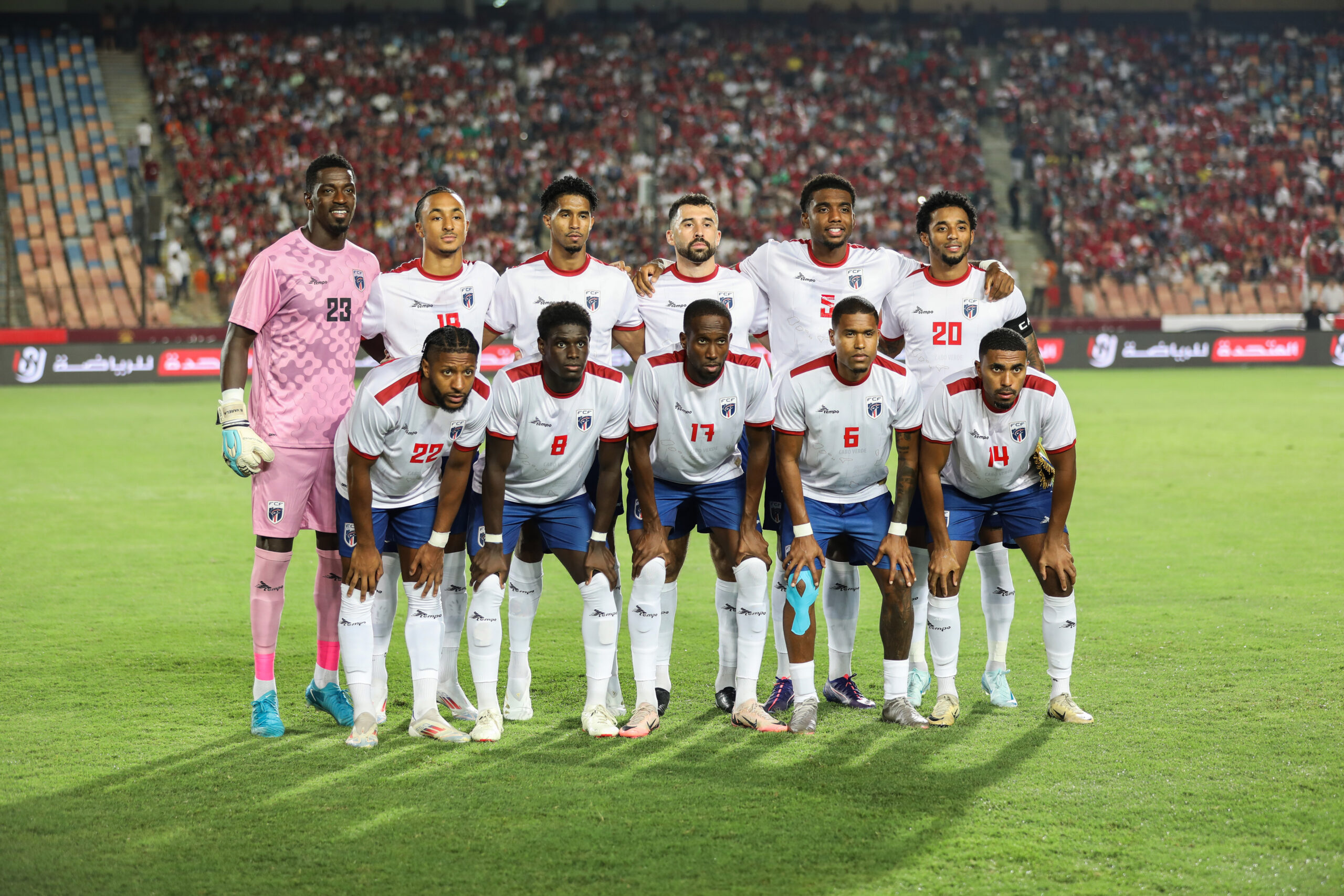
After independence in 1975, many Cape Verdean soccer players chose to play for their birth nations instead of their ancestral home, including Nani, Eliseu, Nélson Marcos (Portugal), Patrick Viera (France), and Henrik Larsson (Sweden). Only recently has the national team, nicknamed Tubarões Azuis (Blue Sharks), been able to attract and retain talent. Even then, 100% of the current side play abroad.
Cape Verde is ranked 70th in the world by FIFA, and only 13th in Africa. They did not qualify for this winter’s AFCON tournament, so will have to organize friendly matches to prepare for the 2026 World Cup.
How They Qualified
Cape Verde finished atop Group D after defeating Eswatini earlier today 3 – 0 at home.
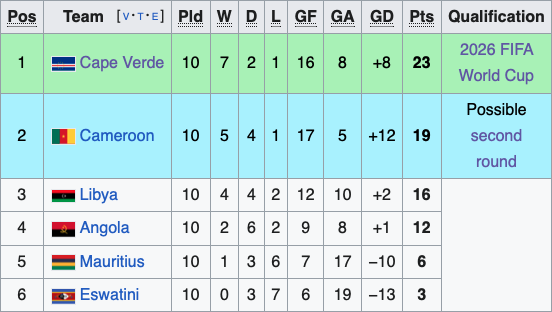
Their overall 7W, 2D, 1L record was one of the strongest in their history. In five home matches they never conceded a goal. Key results for the Blue Sharks included last Thursday’s 3 – 3 draw away against Libya, where they had to come back from a two goal deficit. That point was critical in keeping group favorite Cameroon at bay while they finished out qualifying.
Despite having a two-point lead over Cameroon coming into today’s game, everyone in the National Stadium understood that the team needed a win to guarantee qualification. The first half was a nervy one. Eswatini did a fine job of stymieing the Sharks’ attack, and even managed a few shots themselves. In the second half, however, Cape Verde found their groove.
It was Dailon Liveramento who found the net in the 48th minute with a cheeky back heel. The crowd celebrated, but knew that a one goal lead is a tenuous one. Then Willy Semedo in the 54th minute released the pressure valve in Praia. His short range shot gave them a two-goal cushion, and started to believe it would qualify for its first ever World Cup. Encouraged to skip work to attend the match, packed crowd of 15,000 exploded with cheers and songs and the deafening volume never wavered. The final goal was scored by 37-year old center back Stopira. Brought on as a nod to his years of service for the national team (his debut came in 2008), it served as a welcome reminder of Cape Verde’s past and present coming together is a huge moment of national pride.