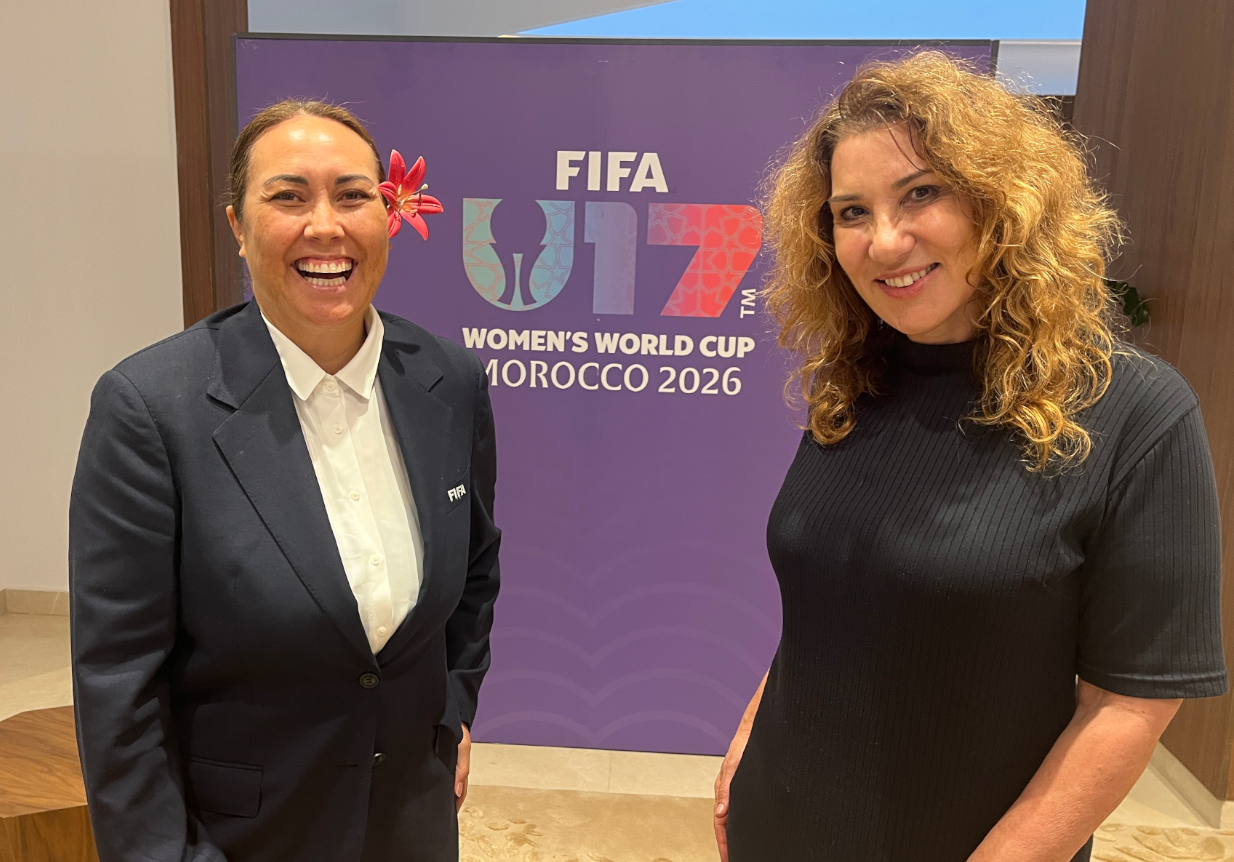

When she fixes you with her determined gaze, one wouldn’t want to disagree with
Sarai Bareman. Or Dame Sarai Bareman, as she’s officially known, honored for her work in football governance in her home country of New Zealand.
But there’s something more you need to know. Sarai Bareman is FIFA’s first ever
Chief Women’s Football Officer, a position she still holds. FIFA. The
Organisation. The One That Runs The Football World. That FIFA.
Of all the podcasts…
We catch up in Morocco, as you do, at the FIFA Under 17 Women’s World Cup. I’m a
Nepo Mum; our daughter is part of the whole exciting whirl. It dawns upon me, as
Sarai and I settle in, that my daughter’s pathway, this extraordinary opportunity on the world stage, has been made possible in no small part by this woman. Dame Bareman’s job it is to help shape the whole shebang of women’s football across the world. AND SHE JOINS ME on this Red Card For Mummy podcast. I’m using capitals because it’s extraordinary. You HAVE to know her.
Go listen to the Red Card for Mummy Podcast.
And yet. And yet. A persistent jangling thought.
I’m swamped by the juxtaposition I can see playing out on the pitch against what I see out on the streets of Casablanca (the commercial centre) and Rabat (the political heart) of Morocco. This is only my experience, mind. Here, at the swish Mohammed VI football complex, the heart of this tournament, there are girls everywhere. Running, kicking, refereeing, bumping, jumping, heading, saving, swiping, scoring. Strong. Powerful. Purposeful.
This football pitch, the kit they wear and the rules of the game give all these girls an equal standing. And in Morocco, the game is a matter of national pride, having
secured the tournament rights in a 5 year deal from 2025 to 2029. Yet on the streets, women and girls seem less visible.
I did ask one lady, working as a chef, where all the other women were. I was speaking bad French, because I have no Arabic. This amused her to no end, and I think she replied that many were at home, looking after children, making meals. I can’t be sure because she was speaking like I understood and I pretended that I did. I did manage to establish successfully that she didn’t have a husband. She laughed. “I am yet to find a good man. So I work.” Did I sense relief? Did I understand correctly? It was all in French. But I digress.
Sarai’s perspective
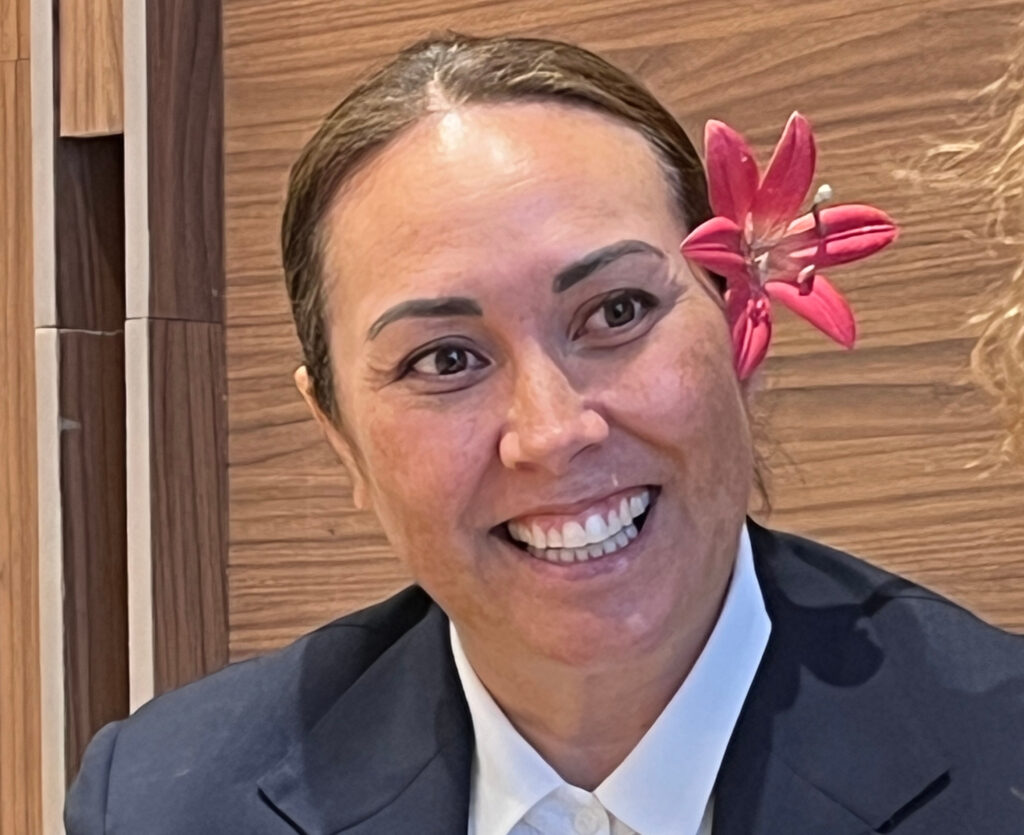
Sarai is happy to speak about this perceived dissonance. She’s happy to speak
about all that she wants to achieve. No question fazes her. This is a woman who is
seriously in the zone. She has tucked a trademark flower behind her ear, almost as a reminder that a woman can enjoy her femininity and be ferocious, all at the same time. That whatever the conditions, this woman will bloom.
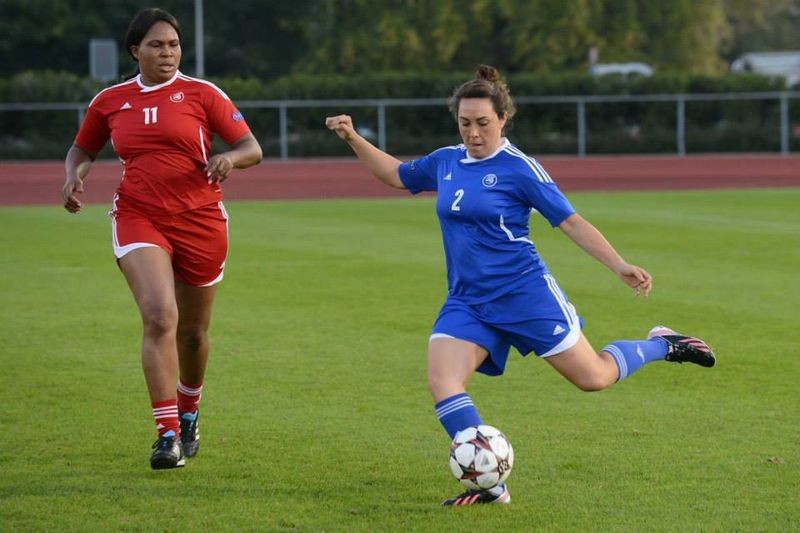
Her fight is for equal opportunities for women and girls to participate in the game as fully as men and boys. It was Sarai Bareman who developed FIFA’s first ever global strategy for women’s football, launched in October 2018. Remember, this is a woman who grew up playing football whilst getting changed in the car. I still thought she was lucky. When I grew up, girls didn’t play football at all.
It’s been almost ten years since Sarai took on the role as FIFA’s Chief Women’s
Football Officer, in the wake of the great corruption scandal that engulfed the
organization in 2015. Sarai was the only female member of the FIFA reform committee. And it’s hardly surprising that beyond development on the pitch, Sarai Bareman is the Boss Girl Advocate for increased female representation in leadership positions within the organization itself.
“I was an aggressive player,” she smiles, “I also like to talk a lot. And the
opposition weren’t always so pleased with some of the things that I would say. So I
did have a few little altercations now and then, but always in good fun. I still see
myself as that same defender. Sometimes a bit aggressive. Still like to talk a lot.”
Growth of the women’s game
The 2023 Women’s World Cup, hosted in Australia and New Zealand, even broke even for goodness sakes. There are great hopes that the tenth edition of the tournament, in Brazil next year, will be the first ever to make a healthy profit.
But there’s still more to do, in the eyes of Sarai. You’ll hear her, unfettered on the
RCFM podcast. She is pragmatic that making money in the game matters, and that women’s football is only just coming into its own in that regard. And yet she’s
insistent that being a good social agent and expanding a revenue base are very
interconnected.
“Decision makers in football, the men, are often led very much by money. And when you can elevate it out of being a social development program into being something that is commercially viable; that can bring more dollars, more bums
on seats, more buying power in the household through engaging with women and girls, then you really start to break through and resonate with the idea that all those things are possible because of the social development.”
It’s almost exactly what makes football diplomacy so very magnetic; using the global power of the game to pioneer a kind of commercial altruism where social good and successful business work hand in hand. Do you still think the game is all about haircuts and Haaland?
“When you oversee the biggest participation sport on the planet, you have an
obligation to use the power that that provides and the platform to not just throw out the thought, but actually have a positive impact. And for me, that question is
specifically for women. Football is an incredible platform to help progress. The
position of women in society matters.”
This is Sarai Bareman…
A flower that blooms in any condition. Who advocates so our daughters can plant their own hopes and dreams on a level playing field.
Football is fortunate. That, I’ve now determined.
Upcoming FIFA Women’s World Cup Matches
Bronze medal match
Who: DPR Korea vs. Brazil
Date: November 7, 2026
Where: Mohammed VI Football Complex, Rabat, Morocco
Kickoff: 7:00am ET / 4:00pm PT
How to Watch: Broadcast live on FS2 and Telemundo Ahora (Spanish)
World Cup Final match
Who: Japan vs. Nigeria
Date: November 7, 2026
Where: Mohammed VI Football Complex, Rabat, Morocco
Kickoff: 7:00am ET / 4:00pm PT
How to Watch: Broadcast live on Universo (Spanish). Streaming on FOX Soccer Plus.