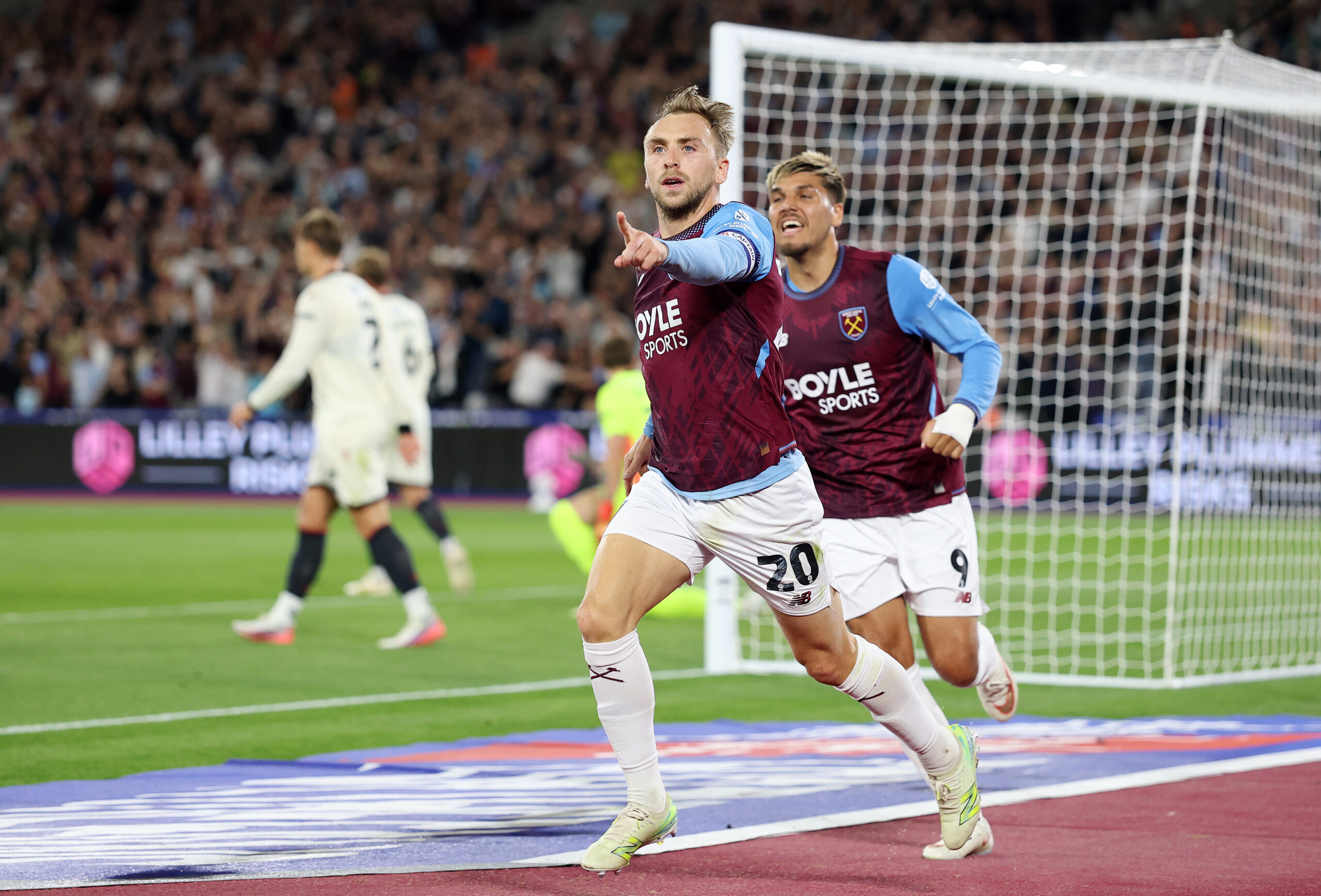

On May 24, 2026, Michael Oliver blew the final whistle on Tottenham’s match against Everton, with João Palhinha’s first-half goal giving them a 1-0 win. It meant that, despite West Ham’s 3-0 victory against Leeds United, Tottenham would escape relegation. West Ham, meanwhile, were sent packing to the second tier after 14 straight seasons in the Premier League.
Cue the Big Spending
One year after winning their first trophy since 2008, Tottenham had avoided disaster. It seemed that they had learnt their lesson: they could no longer afford to be complacent on and off the pitch. It’s why they splurged on Premier League-proven talents like Tosin Adarabioyo, Jan Paul van Hecke, Mateus Fernandes, Sávio and Sandro Tonali, as well as signing Martin Dúbravka, Marcos Senesi and Andrew Robertson on free transfers.
If you include the initial obligation to buy for Omar Marmoush, which will be triggered next summer, Tottenham spent $490 million. It’s a sum second only to this summer’s Manchester City and 2025’s Liverpool summer 2025, both of whom dropped around $600M. That’s not even counting bonuses, wages, sell-on fees, and other clauses.
Given this level of investment, you’d have expected Tottenham to be challenging for European football — especially considering the fact that they aren’t balancing domestic and international commitments. Instead, it’s been more of the same misery in North London.
After being demolished 3-0 at Brentford, Tottenham bounced back with a 5-1 victory against Championship side Charlton Athletic in the EFL Cup. Their mirth was short-lived, however, with Spurs losing 2-0 to Newcastle before drawing 0-0 against Nottingham Forest and Everton. Tottenham sit 17th in the table, one point above Fulham and Aston Villa, and two above last-placed Coventry City.
Just what’s going wrong with Tottenham, and what needs to change in order for them to avoid getting dragged into another relegation fight? Let’s take a look:
Failing to create (and finish) chances
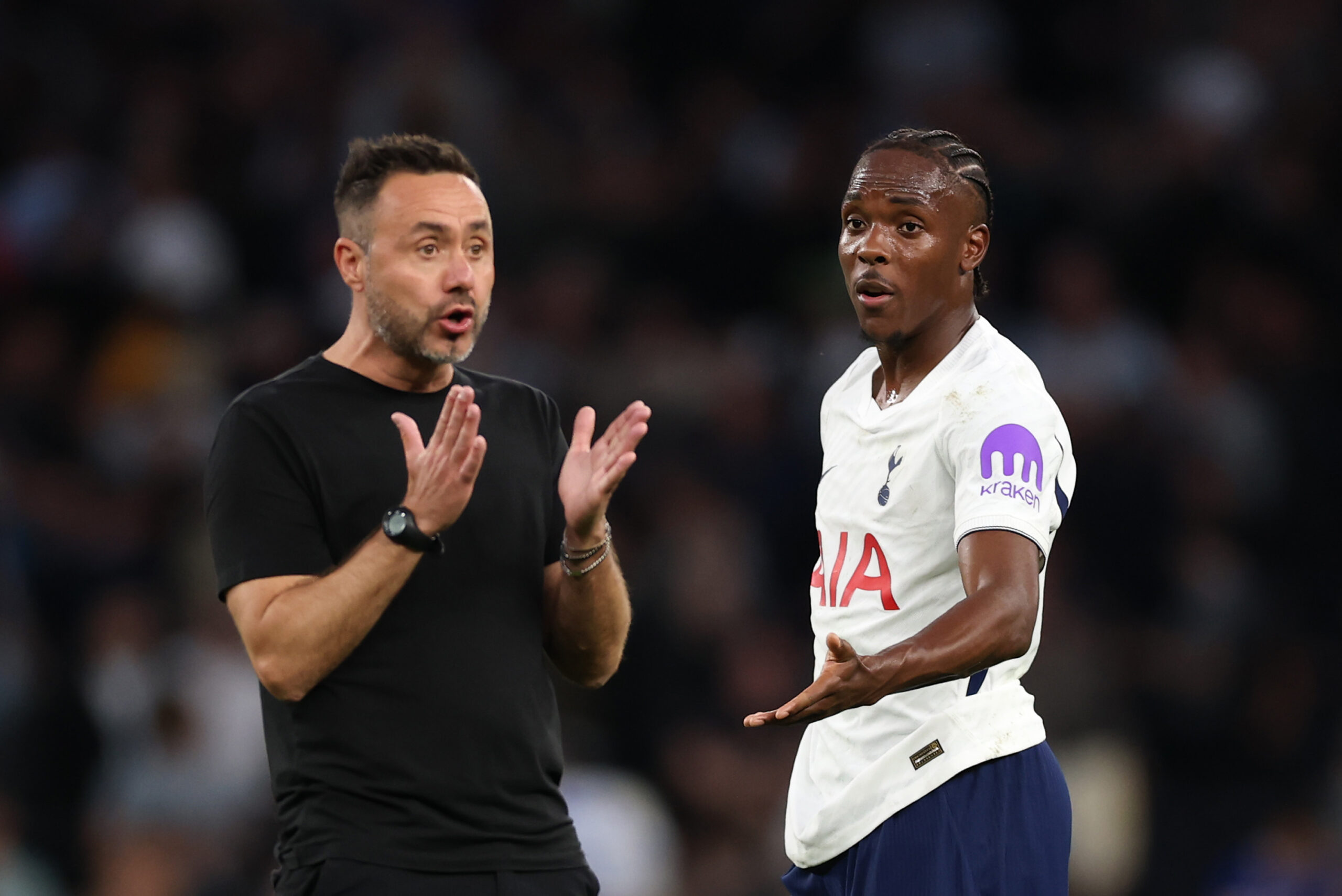
When Roberto De Zerbi took charge six months ago, he did so with the reputation of playing free-flowing football, the kind that lures in the opposition with short, composed passes out from the back and well-executed dribbles, and that eventually ends with a ball in the back of the opposing net.
The Italian has undoubtedly implemented some of his tactical fundamentals: Tottenham lead the Premier League in successful dribbles per game and corner kicks, while they sit fifth for average possession. But in terms of generating goal-scoring opportunities, he has fallen short: Tottenham rank 14th for big chances created and 18th for Expected Goals.
On the one hand, Tottenham simply aren’t generating enough clear-cut opportunities. On the other hand, when they do create chances, their players simply are lacking the confidence and opportunism to finish. The last two players to have scored for Spurs are Palhinha, now at Benfica, and Richarlison, who has been relegated to the reserves.
For all the money that Spurs have spent (in the final third in particular), their attackers simply aren’t proven goal scorers — at least in 2026. Sávio is still trying to recover the world-class form he showed at Girona in 2023/24. Marmoush is trying to rekindle his magic from Eintracht Frankfurt at 2024/25. And Dominic Solanke still hasn’t come close to his 19-goal tally from 2023/24 at Bournemouth.
Struggling to destabilize the opposition
De Zerbi wants his players to invite pressure by patiently circulating possession, coaxing the opponents to jump forward before playing through the newly created space. However, right now, they’re missing a player who can drift into the half-spaces and link together the attack.
As things stand, Spurs don’t have a genuine, between-the-lines creator who can transform the first phase of possession into the third at a moment’s notice. It’s why, far too often, Tottenham’s passing sequences look like: CB → central midfielder → full-back/winger → recycle → CB rather than: CB → midfielder → No.10 between lines → striker/winger.
The likes of Rodrigo Bentancur, Conor Gallagher, Fernandes and Tonali are good functional midfielders, but they don’t really have the incisiveness and vision to thread the needle and manufacture a golden opportunity. James Maddison and Mohammed Kudus have shown this ability before, but both are still trying to get back to their pre-injury levels.
De Zerbi’s football isn’t about racking up possession, but inciting the opponent to abandon their shape. If the opposition refuses to overcommit, Spurs don’t have the individual firepower or chemistry to work the way past a stubborn deep block. We saw this against Everton, where Bentancur completed only three passes to Sávio, three to Marmoush and one to Solanke; Tonali found Sávio and Marmoush four times each but Solanke only once.
Too many passers, not enough runners
Last but not least, Tottenham simply have too many players who want the ball to feet and not enough who are exploiting the last line of defense and keeping the defenders honest with their piercing runs. Players like Marmoush, Solanke and Mathys Tel tend to drift towards the ball and link play rather than pinning the center backs. Others like Sávio want to receive wide and attack his defender.
When you have too many of the same profile, you end up with everybody wanting the pass in front of the defence and nobody wanting to threaten the space in behind. You end up with a cluster of players who are standing in front of the backline, and not enough players who are looking to run past them and chase down a through ball.
Tottenham have no issues making it into enemy territory: they completed 78 final third entries to Everton’s 37, completing 88% of their passes. However, they don’t really know what to do once they finally reach the final third. There is a startling lack of width and dynamism in this team, one that has resulted in their possession play becoming monotonous and predictable.
Whereas at Brighton, De Zerbi’s wingers would receive the ball in isolation after the opponent had already been manipulated centrally, that’s no longer the case. Now, players like Sávio are being asked to manufacture the 1v1 matchup by themselves, and they simply don’t have the talent to do so. The opponent never has to panic; they just have to slide over and adjust their shape in order to nullify the Tottenham attacking threat.
Crunch Time
Tottenham fans will always be in debt to De Zerbi for saving them from relegation, but it’s fair to say that the honeymoon period is over. Now, he enters one of the biggest weeks of his coaching career. Tottenham must travel to Liverpool in the EFL Cup midweek before hosting Aston Villa (who are have their own early season struggles). That’s followed by a long two week International break. If he can’t return Spurs to winning ways in either match, then the board might just start thinking about cutting ties with the Italian and hiring their fourth permanent manager in little over a year.